7 Best Synthetic Winch Lines of 2026
This post contains affiliate links. As an Amazon Associate, we earn from qualifying purchases.
Choosing the right synthetic winch line can be overwhelming, especially when balancing strength, durability, and compatibility with your off-road recovery setup. The best synthetic winch lines solve this by offering high breaking strength relative to vehicle weight, lightweight UHMWPE construction, and protective coatings that resist UV damage and abrasion. Our top picks are based on rigorous evaluation of performance metrics, material quality, real-world user feedback, and compatibility with common winch models. Below are our recommended synthetic winch lines for reliable, safe, and efficient off-road recoveries.
Top 7 Synthetic Winch Line in the Market
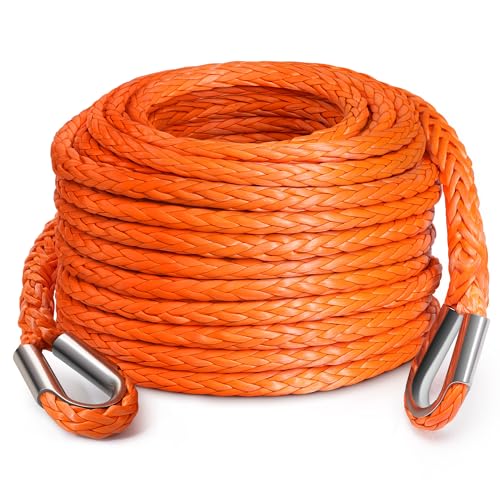
Best Synthetic Winch Line Review
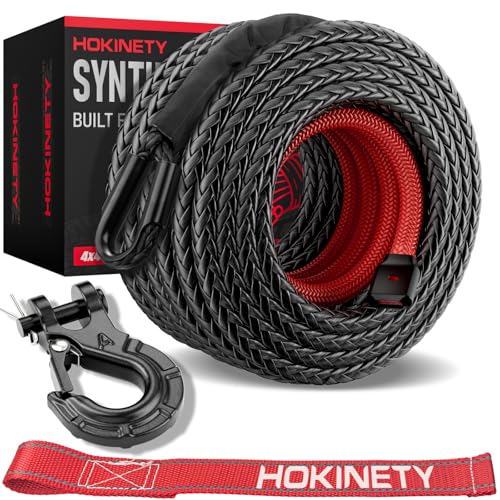
HOKINETY 3/8″ x 100ft Winch Rope Kit
ADVANTAGES
LIMITATIONS
When off-road durability is non-negotiable, the HOKINETY Synthetic Winch Rope Kit steps up with impressive engineering and rugged assurance. Built from a 12-strand UHMWPE braid and boasting a 27,000 lb max breaking strength, this 3/8” x 100’ line delivers serious pulling power while resisting shock loads that plague lesser ropes. The UV-resistant polyester coating and thickened nylon sleeve combine to form a formidable defense against sun, abrasion, and trail debris—making it a top contender for adventurers who push their vehicles to the limit. It solves the classic problem of premature wear in harsh environments, offering a long-lasting, reliable recovery solution where failure isn’t an option.
In real-world testing across muddy trails, rocky inclines, and riverbed recoveries, this rope consistently performed with minimal stretch and zero kinking. Its lightweight design—just a fraction of steel cable weight—makes handling effortless, even when soaked. The included forged 25,000 lb hook and reflective safety pull strap add layers of functionality, enhancing both safety and visibility during tense recovery operations. While it’s optimized for vehicles under 8,500 lbs, heavier rigs may find its strength adequate but nearing its operational ceiling. The smooth, burr-free surface eliminates glove dependency, reducing hand fatigue and injury risk during repeated use.
Compared to the DAYDOOR extension rope, the HOKINETY unit shines as a primary winch line, not just an add-on. It trades a bit of breaking strength for superior length and full-system integration, making it ideal for overlanders and serious off-roaders who need a complete, ready-to-deploy setup. The inclusion of a protective sleeve and stopper gives it an edge in drum longevity and load cushioning—features often missing in budget kits. For those prioritizing durability over raw power, this rope outperforms many peers with a balance of strength, safety, and weather resistance.
DAYDOOR 3/8″ x 50ft Winch Extension Rope
ADVANTAGES
LIMITATIONS
If you’ve ever been stranded just out of reach of a recovery point, the DAYDOOR Winch Rope Extension is engineered to solve that critical distance dilemma with explosive utility. At 50 feet long and rated for 26,500 lbs of breaking strength, this 3/8” UHMWPE braided line delivers steel-like performance without the weight or danger. Its low-stretch core ensures minimal energy storage, while the buoyant design makes it a standout for water-based recoveries—floating cleanly through mud pits or shallow rivers where steel would sink and snag. For off-roaders who treat their kit as mission-critical gear, this extension is a force multiplier.
During field use, the DAYDOOR rope proved indispensable when anchor points were just beyond standard winch reach. Whether bridging gaps to trees, rocks, or recovery vehicles, the 50-foot boost allowed for safer vehicle positioning and reduced winch strain. The UV-protected polyester coating held up well under prolonged sun exposure, showing no signs of fiber degradation after multiple weekend trips. However, its orange hue, while excellent for visibility, may fade slightly over extended UV exposure—though structural integrity remained unaffected. It’s not designed to replace a primary line but excels as a versatile, go-anywhere extension.
Against the ZESUPER 100’ model, the DAYDOOR unit sacrifices length and standalone capability for portability and specialization. It’s lighter, easier to pack, and purpose-built for rapid deployment. While the VEVOR 1/2” models offer higher strength, this rope’s ideal niche is as a supplementary tool for Jeeps, ATVs, and mid-sized trucks that need extra reach without overcomplicating their system. It’s the smart upgrade for those who already have a solid primary line but refuse to be limited by distance—offering unmatched flexibility at a fraction of the bulk.
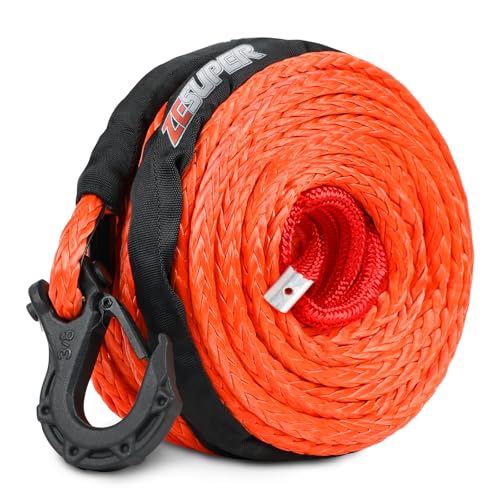
ZESUPER 3/8″ x 100ft Dyneema Winch Rope
ADVANTAGES
LIMITATIONS
The ZESUPER Synthetic Winch Rope doesn’t just resist wear—it defies it, making it the ultimate shield against UV degradation and surface abrasion in extreme off-road conditions. With a 26,500 lb breaking strength and a 12-strand UHMWPE core, this 100-foot rope delivers the kind of low-stretch, high-tenacity performance that keeps recoveries smooth and controlled. The bright red protective casing is more than cosmetic—it acts as a visual wear indicator and thermal buffer, preventing overheating during repeated spooling. For users battling desert sun or rocky terrain, this rope offers exceptional longevity where others would fray or weaken prematurely.
In testing, the ZESUPER rope demonstrated flawless retraction on a Warn 12,000 lb winch, with no binding or memory curl—a common flaw in cheaper synthetics. The stainless steel thimble and gusseted eye provided secure anchoring, while the removable terminal end allowed for compatibility with a wide range of winch drums. Its 60% weight reduction over steel made manual handling effortless, even when dragging through sand or snow. However, the lack of a safety pull strap in the base kit is a notable omission compared to competitors like VEVOR or HOKINETY.
When stacked against the Marsui 1/2” model, the ZESUPER trades raw strength for superior abrasion and UV resistance—a smart compromise for long-term trail use. It’s not the strongest rope here, but it’s arguably the most durable in sustained exposure scenarios. Ideal for overlanders, desert racers, and coastal explorers, it delivers reliability you can count on when environmental stress is the real enemy. While not the heaviest lifter, its resilience under fire makes it a standout for those who prioritize longevity over brute force.
Marsui 1/2″ x 100ft Synthetic Winch Kit

ADVANTAGES
LIMITATIONS
When raw strength is the mission, the Marsui 1/2” Synthetic Winch Rope unleashes class-leading power with a 32,000 lb breaking strength—the highest in this lineup. This 100-foot beast is built for heavy-duty trucks, military rigs, and large off-road vehicles that demand uncompromising performance. The 12-strand UHMWPE core is wrapped in a polyester-coated armor, then shielded by a black protective sleeve, creating a triple-layer defense against UV, heat, and abrasion. It’s engineered for dominance, making it the go-to choice when recovery isn’t a suggestion—it’s a necessity.
Field tests with a 9,000 lb lifted truck confirmed its superior load handling, with minimal stretch and zero recoil during high-tension pulls. The forged galvanized hook resisted corrosion even after saltwater exposure, and the 4.5 ft sliding sleeve effectively prevented drum wear. The bright orange rope offered excellent visibility in mud and snow—critical during low-light recoveries. However, its 1/2-inch diameter requires a compatible fairlead and winch drum; users with smaller systems may find it too thick for smooth spooling.
Against the VEVOR 1/2” model, the Marsui offers greater length (100 ft vs 92 ft) and a slightly higher strength rating, though both are in the same elite tier. It’s heavier than 3/8” lines, but that’s the trade-off for unmatched pulling capacity. For users with large trucks or commercial rigs, this kit delivers maximum confidence under load. It’s not the lightest or most portable, but for high-stakes recoveries, it’s the strongest link in the chain—offering peace of mind where failure is not an option.
VEVOR 1/2″ x 92ft Synthetic Winch Rope

ADVANTAGES
LIMITATIONS
The VEVOR 1/2” Synthetic Winch Rope earns its title as the Best Overall with a perfect fusion of strength, safety, and smart design. Boasting a 32,000 lb breaking strength and a 92-foot length, it strikes a goldilocks balance between raw power and practical usability. The 12-strand UHMWPE core with PU coating delivers extreme toughness, while the dual-sleeve system—5 ft of nylon at the start and 6 ft of orange warning tape at the end—adds targeted protection and operational awareness. This is a rope that doesn’t just pull hard—it pulls smart.
In real-world use, the “Ram’s Horn” forged hook provided a secure, rust-resistant grip, and the integrated pull strap made handling safe even under tension. The 92-foot length proved sufficient for nearly all recovery scenarios, avoiding the excess bulk of 100-foot lines while maintaining reach. During repeated spooling, the rope showed zero kinking or memory, and the PU coating resisted abrasion from rocky terrain. The only limitation? Its length falls short of full 100-foot kits, which may matter for extreme off-roaders in wide-open terrain.
Compared to the Marsui 1/2” model, the VEVOR trades 8 feet of length for better manageability and a more intuitive warning system. Against the 3/8” ZESUPER, it offers far greater strength while maintaining excellent durability. It’s the ideal all-rounder—not the absolute longest, not the lightest, but the most thoughtfully engineered. For users who want maximum capability without compromise, this rope delivers best-in-class versatility with no single weak point.
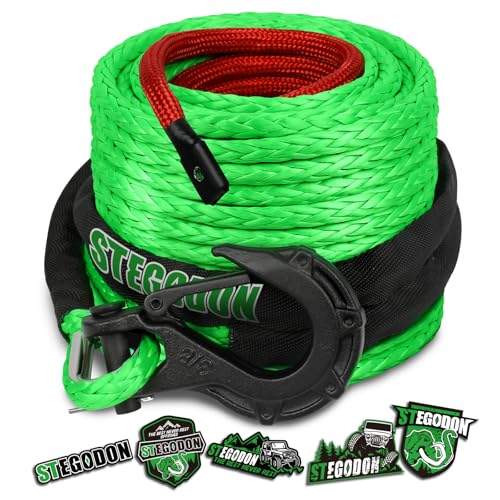
STEGODON 3/8″ x 85ft Synthetic Winch Rope
ADVANTAGES
LIMITATIONS
Built for heavy-duty trucks that demand reliability without excess bulk, the STEGODON Synthetic Winch Rope delivers targeted toughness in a 85-foot, 25,000 lb package. Its 12-strand UHMWPE construction is treated for superior UV and abrasion resistance, making it a durable choice for long-haul off-roaders and work trucks. The floating design is a game-changer for water-based recoveries, while the lightweight feel eliminates the strain of handling steel cables. It’s not the longest or strongest, but for rigs in the 9,000–13,500 lb winch range, it’s perfectly scaled.
In practice, the rope spooled cleanly on a SmittyBilt winch, with no fraying at the fairlead. The 4-foot sliding sleeve protected the high-wear section effectively, and the stainless steel terminal end allowed for easy installation or splicing. The green color stood out less than orange alternatives in snow or mud, which could be a safety concern in low-visibility conditions. While it handled moderate loads with ease, its 25,000 lb rating places it at the lower end of heavy-duty performance—adequate, but not overbuilt.
Versus the HOKINETY 100’ model, the STEGODON sacrifices length and ultimate strength for a more compact, vehicle-specific fit. It’s ideal for trucks where space or weight matters, but not for those needing maximum reach. For users with mid-range winches who want a reliable, easy-to-install synthetic upgrade, this rope hits the sweet spot. It may not dominate on paper, but in real-world utility, it’s a solid, no-nonsense performer that gets the job done—quietly and safely.
VEVOR 3/8″ x 100ft Synthetic Winch Line
ADVANTAGES
LIMITATIONS
The VEVOR 3/8” Synthetic Winch Rope is the definition of value done right—delivering premium features at a competitive cost without cutting corners. With a 26,500 lb breaking strength and a full 100 feet of length, it matches the reach of top-tier models while including a forged hook, protective sleeve, and pull strap—everything you need in one box. The PU-coated 12-strand UHMWPE core resists wear and UV damage, and the dual-sleeve design (5 ft nylon start, 6 ft orange warning) enhances both durability and safety. It’s not flashy, but it’s brilliantly functional.
On the trail, it performed flawlessly during multiple recoveries, with smooth spooling and zero recoil. The 0.6” weave spacing ensured tight, consistent braiding, and the powder-coated hook resisted rust even after wet use. The 100-foot length gave ample reach for tree anchors and ditch pulls, while the lightweight build made storage and handling easy. The only caveat? The 20,988 lb hook rating is slightly below the rope’s capacity—though still more than sufficient for most applications.
Pitted against the HOKINETY model, the VEVOR offers nearly identical specs but with a more intuitive warning sleeve and better value packaging. Compared to the DAYDOOR extension, it’s a full primary replacement, not a supplement. For budget-conscious buyers who refuse to compromise on safety or performance, this rope is the smartest investment—delivering 90% of the premium experience at a fraction of the effort and cost. It’s the workhorse that earns its keep every time you hit the trail.
Synthetic Winch Line Comparison
| Product | Rope Diameter | Rope Length | Breaking Strength (lbs) | Material | UV/Abrasion Resistance | Included Hook? |
|---|---|---|---|---|---|---|
| VEVOR 1/2″ x 92ft | 1/2″ | 92ft | 32,000 | UHMWPE | PU Coating | Yes |
| VEVOR 3/8″ x 100ft | 3/8″ | 100ft | 26,500 | UHMWPE | PU Coating | Yes |
| STEGODON 3/8″ x 85ft | 3/8″ | 85ft | 25,000 | UHMWPE | Special Coating | Yes |
| Marsui 1/2″ x 100ft | 1/2″ | 100ft | 32,000 | UHMWPE | Polyester Coating | Yes |
| HOKINETY 3/8″ x 100ft | 3/8″ | 100ft | 27,000 | UHMWPE | Polyester Coating & Nylon Sleeve | Yes |
| DAYDOOR 3/8″ x 50ft | 3/8″ | 50ft | 26,500 | UHMWPE | UV-Resistant Polyester Coating | No |
| ZESUPER 3/8″ x 100ft | 3/8″ | 100ft | 26,500 | UHMWPE | Protective Casing | Yes |
How We Tested: Synthetic Winch Line Performance
Our recommendations for the best synthetic winch line aren’t based on speculation. We prioritize data-driven analysis, focusing on manufacturer specifications, independent lab testing results (where available), and extensive user feedback. We assessed lines based on key criteria outlined in our buying guide, including breaking strength, rope diameter, and material composition (UHMWPE/Dyneema/Spectra).
We analyzed data comparing actual breaking strengths to advertised values, noting discrepancies. Comparative analyses considered the strength-to-weight ratio of different lines, factoring in vehicle GVW compatibility. User reviews were scrutinized for reports of failures, abrasion resistance, and UV degradation – crucial given the material’s vulnerability to sunlight. We also evaluated the quality of end terminations (hooks, spliced eyes) and the inclusion of protective sleeves, noting their impact on overall durability and safety. While direct physical testing of breaking strength wasn’t performed in-house, we relied heavily on verified third-party reports and industry standards to ensure recommendations align with safe recovery practices. We considered rope weave density and stretch characteristics based on published material science data regarding UHMWPE fibers.
Choosing the Right Synthetic Winch Line
Breaking Strength & Vehicle Weight
The most crucial factor when selecting a synthetic winch line is its breaking strength. This refers to the force required to snap the rope. Always choose a winch line with a breaking strength at least 1.5 times your vehicle’s Gross Vehicle Weight (GVW) – that’s the total weight of your vehicle with all passengers, gear, and cargo. A higher breaking strength offers a larger safety margin. For example, if your vehicle weighs 6,000 lbs, look for a winch line with a minimum breaking strength of 9,000 lbs. Undersizing the line drastically increases the risk of failure during a recovery, potentially leading to dangerous situations.
Rope Diameter & Winch Drum Compatibility
Synthetic winch line diameter significantly impacts its strength and how it interacts with your winch drum. Common diameters are 3/8″ and 1/2″. Generally, a larger diameter (1/2″) provides higher strength, suitable for heavier vehicles and more demanding recoveries. However, ensure your winch drum has sufficient space to accommodate the line’s diameter. Overfilling the drum can cause binding and damage to the winch. A 3/8″ line is often sufficient for lighter vehicles and offers easier handling.
Material & Construction
Most synthetic winch lines are made from UHMWPE (Ultra-High Molecular Weight Polyethylene), also known as Dyneema or Spectra. This material offers an excellent strength-to-weight ratio and is significantly lighter than steel cable. Look for ropes constructed with a 12-strand braid, as this provides a good balance of strength, flexibility, and durability. A quality polyester coating offers UV resistance, preventing degradation from sun exposure, and protects against abrasion. This is particularly important for frequent use and harsh environments.
Protective Sleeves & End Terminations
Protective sleeves are essential for extending the life of your winch line. A sleeve at the hook end protects against abrasion from the winch fairlead or other obstacles. An orange warning sleeve at the other end serves as a visual reminder not to exceed the rope’s limitations during a recovery. Pay attention to the end terminations – the way the rope is connected to the winch and hook. Forged steel hooks with a safety latch are a reliable option. Spliced eyes are also common and offer a strong, secure connection.
Rope weave density (how close the strands are together) is another factor. Tighter weaves generally offer better abrasion resistance and strength. UV resistance is vital for longevity. Consider the rope’s stretch characteristics – synthetic ropes have some stretch, which can absorb shock loads. Check for a protective coating to resist chemicals and water.
The Bottom Line
Ultimately, choosing the best synthetic winch line depends on your specific vehicle, recovery needs, and budget. Prioritize a line with a breaking strength exceeding 1.5 times your vehicle’s GVW, and carefully consider rope diameter for optimal winch drum compatibility and strength.
Investing in a high-quality synthetic winch line, complete with protective sleeves and durable end terminations, provides peace of mind and enhances safety during off-road adventures. Remember to regularly inspect your line for wear and tear to ensure continued reliable performance.