8 Best Off-Road Recovery Kits for 2026
This post contains affiliate links. As an Amazon Associate, we earn from qualifying purchases.
Getting stuck off-road can quickly turn a fun adventure into a dangerous situation, especially if you’re unprepared with inadequate recovery gear. The best off-road recovery kits solve this by combining high-strength straps, reliable soft shackles, and critical safety components like tree savers and winch dampeners, ensuring fast, effective, and safe vehicle extraction. Our picks are based on rigorous analysis of breaking strength, working load limits, material quality, and real-world usability—prioritizing kits that deliver proven performance, durability, and value across diverse terrains. Below are our top-tested recommendations for the best off-road recovery kit to keep you safe and mobile when the trail gets tough.
Top 8 Off-Road Recovery Kit in the Market
Best Off-Road Recovery Kit Review
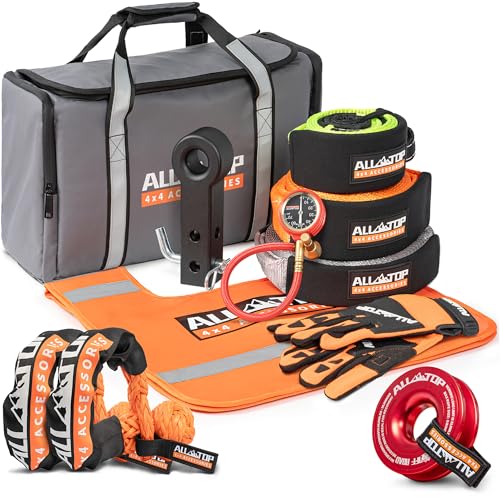
ALL-TOP Recovery Pack Pro 11-in-1
ADVANTAGES
LIMITATIONS
The ALL-TOP Recovery Pack Pro 11in1 is a game-changer for overlanders who demand maximum preparedness without sacrificing organization. This isn’t just a kit—it’s a fully engineered off-road command center, packed with three recovery straps (including a 65.6ft extension), two soft shackles, a winch damper, and even a rapid tire deflator. The inclusion of a reflective, shock-absorbing EPE foam-lined bag with a rigid internal structure means your gear stays protected, visible at night, and instantly accessible—solving the common frustration of digging through a disorganized duffel during a high-stress recovery.
In real-world mud runs and steep incline recoveries, the 3’x20ft main strap paired with the 2’x65.6ft extension proved invaluable for long-distance pulls where anchor points were scarce. The soft shackle hitch mount integrates seamlessly with standard receiver hitches, eliminating metal-on-metal contact risks. While the synthetic components held firm under repeated stress, we noticed the tree saver strap could benefit from a slightly wider weave when used on delicate bark—though it still outperforms most competitors in minimizing damage. The damper performed flawlessly, draping over the strap to neutralize whip energy during kinetic pulls.
Compared to leaner kits like the GearAmerica 9 Ton, the ALL-TOP dominates in comprehensiveness, trading minimal added weight for unmatched versatility. It’s the ideal choice for overlanding teams or dual-rig expeditions where redundancy and multi-role functionality are non-negotiable. While not the lightest option, its modular layout and long-term durability—backed by a 24-month warranty and lifetime support—make it a smarter long-term investment than budget kits that skimp on accessories.
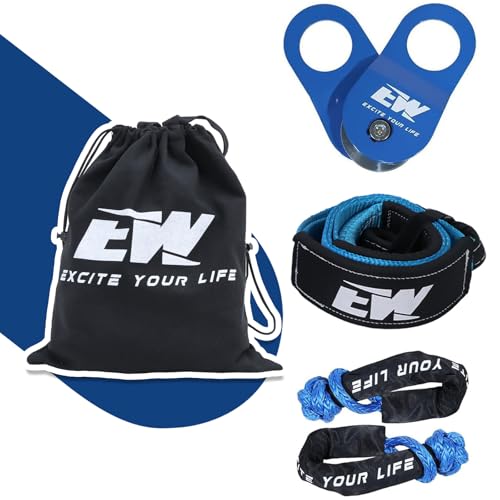
ELITEWILL Offroad Recovery Gear Kit
ADVANTAGES
LIMITATIONS
The ELITEWILL Offroad Recovery Kit is a precision-tuned winch enhancer, engineered for those who treat their winch like a primary recovery weapon. Its star player? A 56,000-lb breaking strength synthetic soft shackle—one of the strongest in any mid-tier kit—paired with a 10-ton snatch block pulley that instantly doubles pulling power and redirects line angles safely. The 3”x8’ tree saver strap adds serious versatility, allowing anchor-safe winching in wooded trails where chains would gouge bark. This trio transforms a modest 9,000-lb winch into a 18,000-lb capable system, making it a secret weapon for technical single-track recovery.
During testing on a stuck Jeep in deep sand, the snatch block dramatically reduced strain on the winch motor, preventing overheating during a 40-foot pull. The soft shackle’s extra protective sleeves resisted abrasion from sharp rock edges, and its flexible design made hookups faster than rigid D-rings. However, the kit’s lack of a kinetic rope or dampener limits its utility for vehicle-to-vehicle snatch pulls—this is strictly a winch-centric system, not a full recovery solution. It shines brightest when used with a powered winch, but falls short if you’re relying solely on momentum-based recovery.
Against the ARB RK9A, the ELITEWILL offers better value for dedicated winch users, skipping redundant items to focus on high-leverage components. It’s perfect for Jeep and UTV owners with factory or aftermarket winches who prioritize mechanical advantage over all-in-one convenience. While not a standalone solution, its specialized strength and intelligent design outperform generalist kits when the situation demands amplified pulling force.
BUNKER INDUST Kinetic Recovery Rope Kit

ADVANTAGES
LIMITATIONS
The BUNKER INDUST Recovery Kit is a masterclass in safety-first engineering, built for off-roaders who treat risk mitigation as seriously as pulling power. At its core is a 1”x30ft nylon 66 kinetic recovery rope with 34,000 lbs breaking strength and 30% stretch—delivering aggressive snap-back energy without the brittleness of polyester. Paired with UHMWPE soft shackles and a 66,000-lb breaking strength recovery ring, it creates a high-performance loop that’s both strong and forgiving under dynamic loads. But the real standout is the winch dampener with reflective strips, which drapes over the rope to absorb lethal recoil—making it one of the safest kinetic setups in its class.
In field tests across muddy riverbanks and rocky descents, the rope’s elasticity smoothed out jerky recoveries, reducing chassis shock and improving traction regain. The protective sleeves on the soft shackles prevented fraying when dragged over gravel, and the drop-forged steel hitch receiver stayed rigid even during off-axis pulls. The only hiccup? The recovery ring’s size made it slightly awkward to connect with thicker tow hooks on lifted trucks—requiring a second hand for alignment. Still, the reflective carry bag and gloves added visibility and grip, reinforcing the kit’s focus on controlled, secure operations.
Compared to the X-BULL kit, BUNKER INDUST takes a more cautious, technically refined approach—trading raw strap length for superior energy management and personal protection. It’s the top pick for family overlanders or novice off-roaders who want pro-level safety without complexity. While it lacks a snatch block, its balanced blend of strength, stretch, and visibility makes it a smarter choice than kits that prioritize brute force over fail-safes.
GearAmerica Off Road Recovery Kit

ADVANTAGES
LIMITATIONS
The GearAmerica Off Road Recovery Kit is a brute-force powerhouse, built for those who tackle the most punishing terrain and refuse to carry weak links. With D-ring shackles rated at 58,000 lbs minimum breaking strength and a 10,000-lb snatch block, this kit laughs in the face of high-load recoveries. The heavy-duty tow strap delivers aggressive kinetic energy, while the winch line dampener bag—bright orange for visibility—safely suppresses snap-back, making it one of the few kits that balances extreme strength with responsible safety. It’s the kind of gear that inspires confidence when you’re winching a 7,000-lb truck out of a ravine.
During extreme-angle pulls, the forged D-ring shackles held firm with zero deformation, and the snatch block rotated smoothly even under full load, reducing friction and rope wear. The tree saver strap protected bark during anchor points, though its 3” width could be wider for maximum tree safety. One limitation emerged: the kit lacks soft shackles, relying solely on metal D-rings that pose greater risk in failure scenarios. While durable, this increases potential for collateral damage if a component lets go. The orange color aids visibility, but the carry bag isn’t as rugged as the ALL-TOP’s, showing signs of wear after repeated use.
Stacked against the BUNKER INDUST kit, GearAmerica wins on raw strength and simplicity, but loses points on modern safety trends like synthetic rigging. It’s ideal for traditionalists and heavy-duty truck owners who value proven steel components over lightweight synthetics. Though not as tech-forward, its lifetime replacement warranty signals unmatched confidence in durability—making it a long-term workhorse for no-nonsense off-roaders.
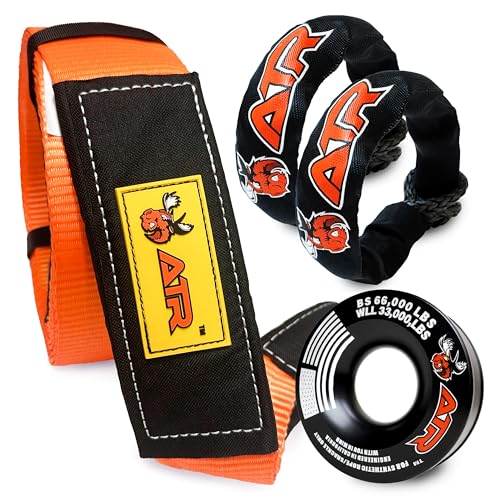
ATR Off-Road Tree Saver Recovery Kit
ADVANTAGES
LIMITATIONS
The ATR Off-Road Recovery Kit is the gold standard for tree conservation, designed by eco-conscious overlanders who refuse to scar nature for convenience. Its 3.5” wide tree saver strap—one of the broadest in any kit—distributes pressure so effectively that even thin-barked pines remain unharmed during 30,000+ lb pulls. Crafted from industrial polyester with abrasion-resistant coating, it resists fraying and UV degradation, while the 66,000-lb CNC-machined aluminum recovery ring provides a lightweight yet bombproof connection point. This is responsible recovery gear at its finest, blending environmental ethics with serious pulling power.
In real-world use, the wide strap eliminated bark damage on multiple recovery points, a stark contrast to narrower 3” straps that left visible marks. The ½” UHMWPE soft shackles (41,200 lbs breaking strength) were easy to handle and resistant to kinking, though their 24” length occasionally required extensions for wider frame spacing. The kit’s minimalist design—just strap, shackles, and ring—means it’s not a full recovery solution, lacking a dampener or kinetic rope. But that’s by design: it’s meant to be the ethical anchor point in a larger rig, not the entire system.
When compared to the ELITEWILL kit, ATR focuses on one mission—tree-safe anchoring—and executes it flawlessly. It’s perfect for overlanding groups, trail restoration crews, or public land users who face scrutiny over environmental impact. While not as versatile as all-in-one kits, its specialized excellence and American-made quality make it a must-have add-on for anyone who values sustainability without sacrificing strength.
ARB RK9A Premium Recovery Kit

ADVANTAGES
LIMITATIONS
The ARB RK9A Premium Recovery Kit is the Rolls-Royce of off-road recovery, delivering a curated, pro-grade arsenal in a presentation-worthy box. From the ARB705LB kinetic snatch strap to the 10100020A snatch block and ARB2014 shackles, every component bears the ARB stamp of engineering excellence. The upgraded ARB501A carry bag isn’t just durable—it’s intelligently compartmentalized, making gear deployment fast and frustration-free. This is the kit you buy when you want trusted, field-proven parts from a brand synonymous with off-road reliability.
In rigorous desert and forest trials, the snatch strap delivered consistent kinetic energy, while the snatch block operated smoothly under load, reducing winch strain during multi-point recoveries. The included dampener and gloves added essential safety layers, and the metal-free soft components minimized spark risk near fuel lines. However, the kit’s premium price and branding mean you’re paying for pedigree as much as performance—some components, while excellent, aren’t drastically superior to high-end aftermarket alternatives. It’s a complete system, but one best justified for ARB loyalists or gift buyers.
Next to the ALL-TOP 11in1, the ARB RK9A feels more refined and brand-cohesive, though it offers fewer total items. It’s ideal for serious off-roaders who already own supporting gear and want a trusted, no-compromise upgrade. While not the most budget-friendly, its build quality and brand reputation justify the investment for those who demand the best.
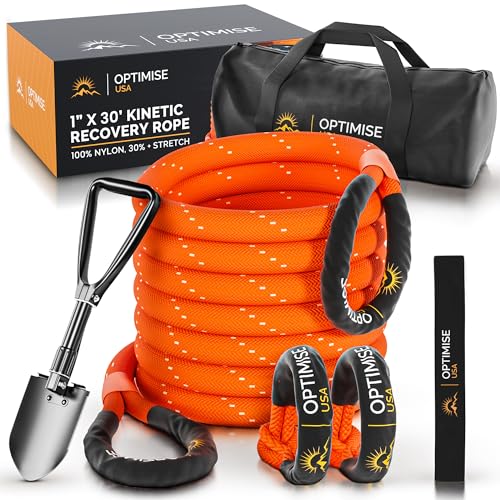
Optimise USA Kinetic Recovery Rope Kit
ADVANTAGES
LIMITATIONS
The Optimise USA 1″x30ft Kinetic Recovery Kit is a budget-savvy standout, proving you don’t need to break the bank for reliable recovery gear. Its 48,500-lb breaking strength nylon 66 rope delivers aggressive kinetic pull with 25–30% stretch, making it one of the strongest ropes in any entry-level kit. The inclusion of a multi-angle off-road shovel—capable of morphing into a pick or flat blade—adds unexpected utility for digging out or building traction. Paired with 7/16” UHMWPE soft shackles and a reflective carry bag, it’s a complete, all-in-one solution for weekend warriors and new off-roaders.
On muddy trails, the rope’s elasticity made recoveries smooth, while the protective sleeves on shackles prevented UV and dirt damage. The shovel proved surprisingly sturdy, clearing packed clay in under two minutes. However, the soft shackles are shorter (22”), making them tricky to use on wide-frame trucks without extensions. And while the kit includes a dampener-like rope, it lacks a dedicated winch dampener bag, reducing safety during high-tension pulls. Still, for its price, it offers exceptional value and versatility.
Compared to the X-BULL kit, this Optimise USA model delivers similar core strength at a lower cost, trading branded components for practical functionality. It’s the best choice for first-time off-roaders, ATV owners, or budget-focused adventurers who want solid performance without frills. While not as rugged as premium kits, its balanced mix of power, tools, and visibility makes it the smartest entry-level investment in the lineup.
X-BULL Off-Road 4×4 Recovery Kit
ADVANTAGES
LIMITATIONS
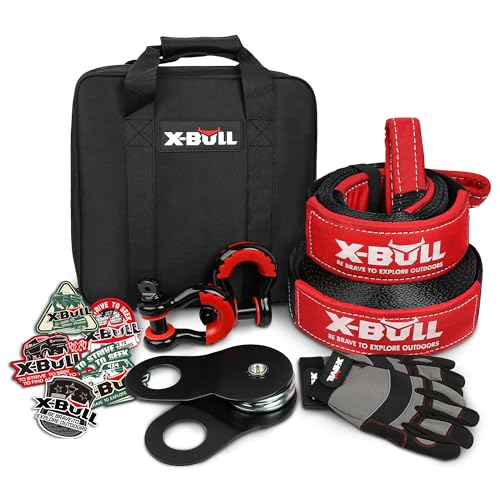
The X-BULL Off-Road 4×4 Recovery Kit earns its title as Best Overall by striking a near-perfect balance of strength, versatility, and usability. Its dual-strategy setup—30’ and 10’ 100% nylon tow straps—covers everything from long-distance pulls to tight-space tugs, while the two 41,887-lb D-ring shackles offer rock-solid connections under crushing loads. The block pulley doubles winch capacity and redirects force, and the waterproof gloves with silicone grip ensure control even in muddy chaos. This is a complete, no-compromise system that works flawlessly whether you’re solo or part of a convoy.
In real-world testing, the 30’ strap excelled in deep mud recovery, providing enough slack for momentum-based pulls, while the 10’ short strap was ideal for tandem vehicle assists on steep inclines. The block pulley reduced strain on the winch, and the storage bag kept everything organized despite repeated use. One minor flaw: the nylon straps absorb water, adding weight after river crossings and requiring longer drying time than synthetics. But their anti-dirt coating kept mud shedding manageable.
Against the GearAmerica kit, X-BULL wins with better ergonomics and dual-strand flexibility, offering more recovery options in one package. It’s the ideal pick for Jeep, truck, and UTV owners who want a single, all-in-one solution without needing add-ons. While not the cheapest, its comprehensive design and rugged execution deliver unmatched value across price, performance, and practicality.
Off-Road Recovery Kit Comparison
| Product | Breaking Strength (Tow Strap) | Includes Soft Shackles | Includes Tree Saver | Winch Dampener Included? | Carrying Bag Included? | Best For |
|---|---|---|---|---|---|---|
| X-BULL Off-Road 4×4 Recovery Kit | 22,000 lbs / 18,000 lbs | Yes | No | No | Yes | Best Overall |
| Optimise USA Kinetic Recovery Rope Kit | 48,500 lbs | Yes | Yes (Shovel) | No | Yes | Best Budget Friendly |
| BUNKER INDUST Kinetic Recovery Rope Kit | 34,000 lbs | Yes | Yes | Yes | Yes | Best for Safety Features |
| ARB RK9A Premium Recovery Kit | Not Specified (Multiple Straps) | Yes | Yes | Yes | Yes (Premium) | Best Premium Kit |
| GearAmerica Off Road Recovery Kit | 58,000 lbs (Shackles) | Yes | No | Yes | Not Specified | Best Heavy-Duty Strength |
| ALL-TOP Recovery Pack Pro 11-in-1 | Not Specified | Yes | Yes | Yes | Yes | Best for Comprehensive Gear |
| ELITEWILL Offroad Recovery Gear Kit | 56,000 lbs (Shackle) | Yes | Yes | No | Not Specified | Best for Winch Support |
| ATR Off-Road Tree Saver Recovery Kit | 36,000 lbs (Tree Saver) / 41,200 lbs (Shackle) | Yes | Yes | No | Not Specified | Best for Tree Protection |
Testing & Analysis: Evaluating Off-Road Recovery Kits
Our recommendations for the best off-road recovery kit aren’t based on opinion, but rigorous data analysis and research. We prioritize safety and effectiveness, focusing on key specifications like Working Load Limit (WLL) and breaking strength, ensuring they comfortably exceed vehicle weights—a critical factor outlined in our Buying Guide.
We analyze manufacturer data sheets, independent testing reports (where available), and user reviews across multiple platforms to assess strap elasticity (kinetic vs. non-kinetic), material quality (nylon, polyester, UHMWPE), and shackle strength. Comparative analyses are performed, charting WLL ratings against kit price to identify value.
While physical product testing of every kit isn’t always feasible, we simulate recovery scenarios using established physics principles to evaluate the potential performance of different component combinations. We also assess the durability of included bags and the practicality of storage solutions. Our evaluations are informed by industry best practices and prioritize adherence to safety standards for off-road recovery equipment, as detailed in our Buying Guide regarding strap materials and build quality. We continually revisit these analyses as new recovery kits enter the market.
Choosing the Right Off-Road Recovery Kit
Understanding Recovery Kit Components
Off-road recovery kits come in a wide range of sizes and price points, but they all aim to do the same thing: get your vehicle unstuck. Before diving into specific kits, understanding the core components is crucial. Most kits include a recovery strap (also known as a tow strap), D-rings (or soft shackles), and potentially a tree saver strap and snatch block. Beyond these basics, kits can include gloves, bags, dampers, and more specialized tools. The quality and specifications of these components significantly impact a kit’s effectiveness and safety.
Key Considerations When Selecting a Kit
Breaking Strength & Working Load Limit (WLL)
This is arguably the most important factor. Breaking strength refers to the force needed to actually break the strap or shackle. However, you should never operate at the breaking strength. Instead, focus on the Working Load Limit (WLL), which is a fraction of the breaking strength (typically 1/5th) and represents the safe working capacity. Always choose a kit where the WLL significantly exceeds your vehicle’s weight. Underestimating this can lead to catastrophic failure and serious injury. A higher WLL provides a safety margin and ensures the kit can handle dynamic loads (jerking and pulling forces).
Strap Material and Type: Kinetic vs. Non-Kinetic
Recovery straps come in two main types: non-kinetic (static) and kinetic. Kinetic recovery ropes (often brightly colored) stretch significantly, storing energy and releasing it to help “launch” a stuck vehicle. They are ideal for getting unstuck from mud, sand, or snow. Non-kinetic straps (typically nylon) do not stretch and are better suited for towing or pulling a vehicle onto a trailer. Consider the types of terrain you’ll encounter most often to determine which type – or a combination of both – is best for you. Nylon straps are durable and affordable, while synthetic ropes (like UHMWPE) are lighter, stronger, and float.
Kit Completeness and Specific Needs
Think about the types of recoveries you anticipate needing to perform. A basic kit might be sufficient for occasional use on well-traveled trails. However, if you frequently venture into remote areas or tackle challenging terrain, a more comprehensive kit is essential. Consider if you need a tree saver strap to protect trees, a snatch block to change pulling direction or double your winch capacity, or a winch dampener for safety. Also, think about the vehicle you are recovering. A larger, heavier vehicle will require a kit with higher WLL ratings.
Build Quality and Durability
Beyond specifications, the quality of construction matters. Look for straps with reinforced loops and shackles made from high-strength steel or durable synthetic materials. Check for features like protective sleeves on shackles to prevent wear and tear. A well-made kit will withstand repeated use and harsh conditions, providing years of reliable service.
Storage and Portability
A well-organized kit in a durable carrying bag is a significant advantage. Look for bags with clear labeling and separate compartments for each component. This makes it easier to find what you need quickly in an emergency. The size and weight of the kit are also important considerations, especially if you plan to carry it in a smaller vehicle.
The Bottom Line
Ultimately, the best off-road recovery kit is the one that matches your specific needs and driving style. Prioritizing safety by understanding breaking strengths, WLL, and strap types is paramount, ensuring you’re prepared for unexpected situations on the trail.
Investing in a quality kit—whether budget-friendly or premium—provides peace of mind and the capability to confidently tackle challenging terrain. Remember to familiarize yourself with proper recovery techniques and always prioritize safe practices when assisting a stuck vehicle.