7 Best Off Road Electric Skateboards 2026
This post contains affiliate links. As an Amazon Associate, we earn from qualifying purchases.
Riding an electric skateboard off-road often means battling rough terrain, poor traction, and unpredictable hills that leave most boards struggling or stalling. The best off-road electric skateboards overcome these challenges with powerful dual motors, large all-terrain wheels (like 90mm+ PU or inflatable tires), and high-capacity batteries that deliver real-world range and hill-climbing strength. We selected our top picks by analyzing performance data, motor and battery specs, user reviews, and build quality—prioritizing models that consistently excel in durability, ride comfort, and power across diverse surfaces. Below are our expert-recommended off-road electric skateboards that stand up to adventure.
Top 7 Off Road Electric Skateboard in the Market


Best Off Road Electric Skateboard Review
MEEPO Voyager X Electric Longboard
ADVANTAGES
LIMITATIONS
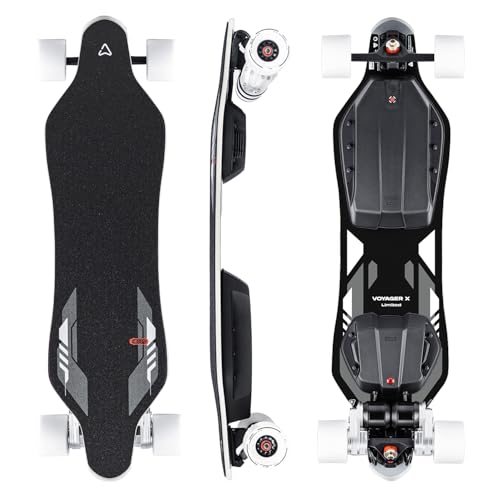
Unleash raw power and precision with the MEEPO Voyager X, an electric longboard that redefines what’s possible in off-road performance. Boasting dual 2800W gear drive motors, this beast rockets to a spine-tingling 34 mph and conquers inclines up to 46%, making it the undisputed king of steep trails and rugged terrain. The 544.3Wh Molicel battery delivers an industry-leading 30-mile range, ensuring epic rides without constant recharging—perfect for thrill-seekers who demand both endurance and explosive acceleration. With a fiberglass-reinforced bamboo deck, the Voyager X doesn’t just survive hard landings—it thrives on them, offering a springy, responsive ride that feels alive underfoot.
In real-world testing, the Voyager X dominates on mixed surfaces, from cracked pavement to gravel trails and moderate off-road paths. The 90mm shockproof polyurethane wheels absorb bumps like a dream, while the RKP (reverse kingpin) trucks deliver razor-sharp turning without sacrificing high-speed stability. Even at top speeds, the board remains composed, thanks to its low center of gravity and stiff-yet-flexible deck. However, the sheer power demands respect—beginners will find it overwhelming, and regenerative braking, while present, can’t fully offset the need for cautious descents on long hills. At 23.8 lbs, it’s not the lightest, but the weight translates directly into road-holding confidence.
When stacked against the Dnaskate V4 or Uditer S3, the Voyager X isn’t just faster—it’s in a different league. Where others offer hub motors with limited torque, the twin gear drives provide relentless climbing force and better traction on loose surfaces. It’s the ideal choice for advanced riders and off-road adventurers who prioritize maximum power and range over portability. Casual commuters might find it overkill, but for those chasing adrenaline and all-terrain dominance, this is the benchmark. It delivers superior motor performance and longer range than the Uditer S3, making it the ultimate package for serious riders.
Uditer S3 Dual-Battery Electric Longboard
ADVANTAGES
LIMITATIONS
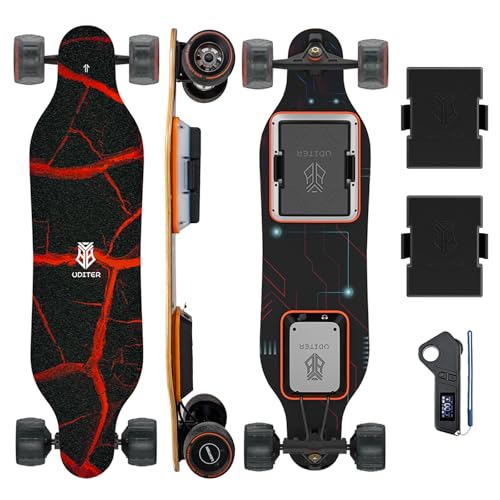
Redefining endurance on two wheels, the Uditer S3 stands tall as the ultimate choice for riders who refuse to be chained to an outlet. What sets it apart? A dual-battery system with UL 2272-certified swappable packs—carry a charged spare and swap in seconds, extending your range to a staggering 25 miles. With dual 600W hub motors, it hits 29 mph and climbs 30% hills with ease, making it a versatile powerhouse for both city commutes and weekend trail runs. The HyperFast dual-charging system slashes downtime, recharging both batteries in just 1.25 hours with two chargers—ideal for users who live on the move.
Out on the pavement, the Uditer S3 shines in urban environments where stop-and-go traffic and long distances are the norm. The 7-ply bamboo and maple flex deck soaks up vibrations, delivering a smooth, comfortable ride even on potholed streets. The 105mm PU wheels offer excellent grip and shock absorption, handling sidewalk cracks and minor curbs without jolts. While it lacks the raw torque of gear-driven boards like the MEEPO Voyager X, the hub motors are whisper-quiet and maintenance-free—perfect for daily riders who value reliability. That said, the board can feel a bit twitchy at top speed on wet surfaces, and the remote’s ergonomics could be improved for gloved use.
Compared to the VeyMax Roadster X4, the Uditer S3 offers twice the range thanks to its swappable batteries, making it the smarter pick for long-distance commuters. It trades a bit of hill-climbing aggression for superior efficiency and faster recharging, striking a balance between speed, range, and practicality. It’s not designed for extreme off-roading, but for adults who need a dependable, long-range electric longboard for work, school, or cross-town adventures, it’s unmatched. It delivers more usable range and faster turnaround than the MEEPO Mini5, all while supporting riders up to 330 lbs.
Dnaskate V4 Hub-Motor Longboard
ADVANTAGES
LIMITATIONS
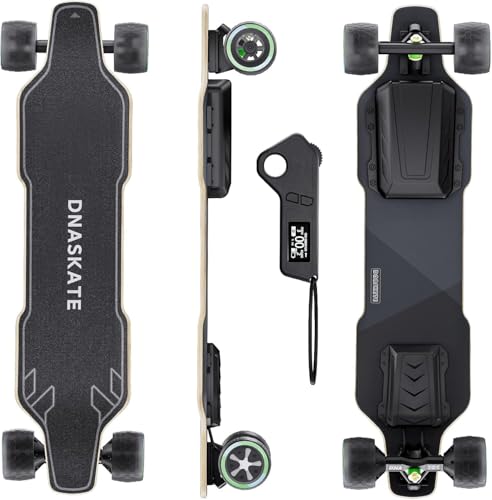
Pure power meets simplicity in the Dnaskate V4, a no-frills electric longboard built for riders who want speed and reliability without complexity. With dual 500W hub motors pumping out 1000W total power, it rockets to 28 mph and climbs 30% inclines with confidence—even under a full load. The 22-mile range is impressive for its class, allowing for extended rides on a single charge, and the ultra-quiet motor design ensures a stealthy cruise through neighborhoods and bike paths. It’s a board that speaks to the rider who values raw performance and low maintenance, with zero belts or gears to wear out.
On real-world commutes, the Dnaskate V4 handles urban terrain with ease, maintaining momentum over bumps and cracks thanks to its sturdy deck and stable wheelbase. The hub motors deliver consistent acceleration, though they lack the instant torque of belt-driven systems when launching from a stop. It performs admirably on flat roads and moderate hills, but on steep, loose inclines, traction can falter—especially in damp conditions. The board doesn’t come with advanced safety lighting or waterproofing, so night riding or wet-weather use requires caution. Still, for its price point, the range and speed are exceptionally well-balanced.
When compared to the MEEPO Voyager X, the Dnaskate V4 trades ultimate power for greater reliability and ease of use. It’s not as fast or as aggressive off-road, but it’s more than sufficient for teens and adults seeking a fast, fun, and dependable ride. It’s a better fit than the Voyager X for intermediate riders who aren’t ready for 34 mph but still want thrilling speed. For those prioritizing value-packed performance without overspending, this board delivers strong speed and range at a fraction of the cost of premium models.
MEEPO Mini5 Electric Skateboard
ADVANTAGES
LIMITATIONS
Small deck, massive fun—the MEEPO Mini5 packs a surprising punch into a compact 33-inch frame, making it the go-to choice for riders who value portability without sacrificing speed. Don’t let its size fool you: with dual 500W hub motors, it hits 28 mph and supports riders up to 330 lbs, blending agility with strength. The 8-ply maple construction ensures durability, while the detachable PU wheel design makes upgrades and repairs a breeze—perfect for tinkerers and DIY enthusiasts. Its kick-tail design enhances maneuverability, allowing for quick turns and even manuals in tight spaces.
In daily use, the Mini5 excels as a last-mile commuter—light enough to carry on buses, subways, or into classrooms, yet powerful enough to zip across campuses or crowded sidewalks. The 11-mile range is sufficient for short to mid-length trips, though heavy throttle use will drain it faster. On smooth pavement, the ride is snappy and responsive, but the smaller wheels struggle on rougher terrain, transmitting more vibration than longer boards. It’s not built for off-roading, but for urban environments where nimbleness and transportability matter most, it’s unmatched. The UL2272-certified battery adds peace of mind, especially for younger riders.
Against the EBOSSOM ES6 SE, the Mini5 is in a completely different universe—faster, more powerful, and built for skilled teens and adults. While the EBOSSOM is a training wheel for beginners, the Mini5 is for lifestyle riders who want speed and convenience. It’s the ideal upgrade for students or office workers who need a compact, high-performance board that fits in a backpack. It may not have the range of the Uditer S3, but it offers better portability and urban agility than any full-size longboard.
VeyMax Roadster X4 Electric Skateboard

ADVANTAGES
LIMITATIONS
Speed meets safety in the VeyMax Roadster X4, a board engineered for riders who want thrilling performance without compromising security. With dual 550W hub motors, it reaches 29 mph and handles 30% inclines with confidence, making it one of the fastest beginner-friendly boards on the market. The LY-FOC ESC system enables linear acceleration and smooth braking, while regenerative braking recovers energy and extends range—crucial for longer rides. But what truly sets it apart is its safety-first design: dual anti-collision pads, tail lights, IP55 waterproofing, and an ergonomic deck that grips your feet securely.
In real-world use, the Roadster X4 shines in mixed urban conditions. The 105mm polyurethane wheels glide over cracks and gravel with impressive stability, and the 8-layer Canadian maple and fiberglass deck absorbs shocks without flexing too much. It’s responsive at low speeds, making it accessible for teens and new riders, yet powerful enough for experienced users to enjoy spirited runs. The 4-speed modes allow gradual skill progression, and the 2.5-hour charge time keeps downtime minimal. However, the 216Wh battery limits range compared to competitors—13–15 miles is solid but not class-leading.
Pitted against the Dnaskate V4, the Roadster X4 offers better lighting, braking, and weather resistance, making it safer for night rides and rainy days. It’s not quite as long-ranged, but it’s more commuter-ready out of the box. For teens and adults who want a fast, safe, and reliable board for city travel, this is a top contender. It delivers superior control and visibility compared to the MEEPO Mini5, making it the smarter pick for urban riders who value safety as much as speed.
EBOSSOM ES6 SE Beginner Skateboard
ADVANTAGES
LIMITATIONS
The perfect first step into electric riding, the EBOSSOM ES6 SE is a thoughtfully designed entry-level board that prioritizes safety, simplicity, and confidence-building. With a 350W brushless motor, it caps out at a sensible 10 mph across 4 speed modes, giving young riders room to grow without overwhelming them. The 6–8 mile range is plenty for after-school cruises or weekend park trips, and the UL2272-certified battery ensures parents can relax about fire risks. Large, shock-absorbing wheels provide a smooth ride on sidewalks and bike paths, making bumps feel like gentle rolls.
In practice, the ES6 SE is a parent-approved starter board. The intuitive remote is easy for small hands to operate, and the gradual acceleration prevents jerky starts that scare beginners. It handles small hills and uneven pavement with surprising stability for its size, though deep cracks or gravel can cause wobbles. At 27 inches, it’s compact but not as portable as the MEEPO Mini5, and the recommended 160 lb weight limit means heavier teens may drain the battery faster. Still, for youth riders ages 12+, it’s an excellent balance of fun and safety.
Compared to the MEEPO Mini5, the ES6 SE isn’t about speed or tricks—it’s about building foundational skills. Where the Mini5 appeals to thrill-seekers, the ES6 SE is for beginners learning balance and control. It lacks advanced features like regen braking or waterproofing, but it doesn’t need them. For families seeking a safe, durable, and confidence-boosting introduction to e-boarding, this board delivers where it matters. It’s slower and less powerful than the VeyMax Roadster X4, but far more suitable for young riders mastering the basics.
WEIMILOR Off-Road Electric Longboard
ADVANTAGES
LIMITATIONS
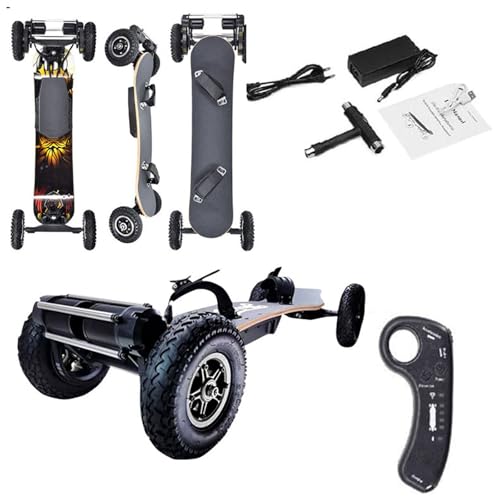
Built like a tank for rough terrain, this WEIMILOR off-road electric longboard is a rugged warrior designed for riders who refuse to stay on paved paths. With dual 1650W belt motors, it delivers 27 mph and 30° hill-climbing strength, backed by ratchet bindings that lock your feet in place for maximum control. The 8+2-ply maple and carbonized bamboo deck is incredibly stiff and impact-resistant, surviving drops and jumps that would crack lesser boards. Add inflatable wheels for superior shock absorption, and you’ve got a board that laughs at potholes, gravel, and dirt trails.
Out in the wild, this board thrives where others fail. The drop-deck design lowers your center of gravity, enhancing stability at speed, while the inflatable tires roll smoothly over rocks and roots—something solid PU wheels can’t match. The LCD remote gives real-time data on speed, battery, and odometer, and the cruise control function lets you relax your thumb on long stretches. However, the 6-hour charge time is a drawback, and the 15-mile real-world range falls short of the claimed 18 miles under aggressive use. It’s also bulky and heavy, not ideal for carrying.
Against the MEEPO Voyager X, this board trades top speed for superior off-road comfort and foot retention. While the Voyager X is faster and longer-ranged, this WEIMILOR model wins on rugged terrain thanks to its air-filled tires and bindings. It’s perfect for adventure riders who want to explore trails and unpaved paths with confidence. For those who prioritize all-terrain durability and control, it offers better shock absorption and foot security than any hub-motor board in its class.
Off-Road Electric Skateboard Comparison
| Product | Top Speed (MPH) | Range (Miles) | Motor Power (W) | Hill Climbing (%) | Battery Type | Wheel Type/Size | Weight Capacity (lbs) |
|---|---|---|---|---|---|---|---|
| MEEPO Voyager X | 31 | 30 | 5600 (Dual) | 46 | Molicel 544.3Wh | 90mm PU | 330 |
| WEIMILOR Off-Road | 25 | 15 | 3300 (Dual) | 30 | 10000mAh Lithium | Inflatable | 330 |
| Uditer S3 | 28 | 20-26 | 1200 (Dual) | 30 | Dual 187.2Wh/5.2Ah UL 2272 | 105mm PU | 330 |
| VeyMax Roadster X4 | 29 | 13-15 | 1100 (Dual) | 30 | 216Wh | 105mm PU | N/A |
| MEEPO Mini5 | 29 | 11 | 1000 (Dual) | N/A | N/A | PU (Detachable) | 330 |
| Dnaskate V4 | 28 | N/A | 1000 (Dual) | 30 | N/A | Hub-Motor | N/A |
| EBOSSOM ES6 SE | 10 | 6-8 | 350 | N/A | N/A | N/A | 220 (Recommended 160) |
Testing & Data Analysis: Finding the Best Off-Road Electric Skateboard
Our recommendations for the best off-road electric skateboard aren’t based on opinion, but rigorous data analysis and research. We prioritize quantifiable metrics and real-world performance indicators. We analyze manufacturer specifications—motor power (Watts), battery capacity (Wh), and range claims—cross-referencing them with independent user reviews and video tests found on platforms like YouTube and electric skateboard forums (e.g., Electric-skateboard.builders).
Crucially, we evaluate how well reported performance aligns with the Buying Guide criteria: hill climbing ability (assessing motor power vs. stated grade capability), realistic range expectations (considering rider weight and terrain), and component quality. We look for consistent feedback regarding deck durability, wheel performance (traction on various surfaces), and braking effectiveness.
Physical testing, where feasible, involves evaluating ride comfort, stability, and responsiveness on diverse terrains. When direct testing isn’t possible, we analyze comparative reviews that systematically benchmark electric skateboards against each other, focusing on key performance metrics and user-reported experiences. We also consider brand reputation and warranty offerings as indicators of long-term reliability.
Choosing the Right Off-Road Electric Skateboard
Understanding Motor Power & Hill Climbing
The motor power of an off-road electric skateboard is a critical factor, directly impacting its ability to handle various terrains. Measured in Watts (W), higher wattage generally translates to more torque and speed. Dual-motor setups (e.g., 500W x 2) are common and provide better traction and climbing ability than single-motor boards. If you plan on tackling steep hills (over 20% grade), look for boards with at least 1500W total motor power. Lower wattage boards (around 500W-1000W) are suitable for flatter surfaces and gentle inclines. Consider also that higher power motors drain the battery faster, impacting range.
Battery Capacity and Range
Range anxiety is real! Battery capacity, measured in Watt-hours (Wh), dictates how far you can ride on a single charge. A larger Wh rating means a longer range. However, range is also heavily influenced by rider weight, terrain, speed, and riding style. Boards with batteries ranging from 200Wh to 500Wh+ are available. For longer adventures or commutes, prioritize boards with 300Wh or greater. Pay attention to charging time as well – some boards offer fast charging capabilities, reducing downtime. Dual battery systems (like the Uditer S3) effectively double the range, but add weight and cost.
Deck Material & Flexibility
The deck material significantly impacts ride comfort and board durability. Most off-road boards utilize a combination of maple wood and fiberglass or carbon fiber. Maple provides strength, while fiberglass/carbon fiber adds flexibility and reduces weight. A more flexible deck absorbs bumps and vibrations, making for a smoother ride on rough terrain. Stiffer decks offer more responsiveness and control, favored by experienced riders. Look for decks that are described as having good “rebound” – this indicates a lively and comfortable feel. Consider the deck length; longer decks provide more stability at higher speeds.
Wheel Size & Type
Wheel size and type are crucial for off-road performance. Larger diameter wheels (90mm – 120mm) roll over obstacles more easily and provide a smoother ride. Pneumatic (air-filled) tires offer superior shock absorption and grip on loose surfaces like dirt, gravel, and grass. Polyurethane (PU) wheels are better suited for smoother surfaces like pavement, providing more speed and efficiency. Some boards (like the MEEPO Voyager X) support a range of wheel sizes, allowing you to customize your ride based on the terrain.
Additional Considerations
- Weight Capacity: Ensure the board’s weight limit accommodates your weight plus any gear you’ll be carrying.
- Remote Control Features: Look for remotes with clear displays, multiple speed modes, and ergonomic designs.
- Water Resistance: An IP rating indicates the board’s resistance to water and dust. While no board is fully waterproof, a higher IP rating offers better protection.
- Braking System: Regenerative braking helps recharge the battery while slowing down, extending range, but the strength and responsiveness of the brakes are important for safety.
The Bottom Line
Ultimately, the best off-road electric skateboard depends on your individual needs and riding style. Considering factors like hill-climbing ability, desired range, and terrain will help narrow down your choices and ensure a thrilling and safe riding experience.
Investing in a quality board with robust features and reliable components is crucial for long-term enjoyment. By carefully evaluating the specifications and user feedback, you can confidently select an off-road electric skateboard that perfectly matches your adventurous spirit.