9 Best Off Road Electric Bikes of 2026
This post contains affiliate links. As an Amazon Associate, we earn from qualifying purchases.
Riding an off-road electric bike through rugged terrain can be thrilling, but choosing the wrong model means struggling with poor traction, weak motors, or batteries that die too soon. The best off road electric bikes solve these issues with powerful dual motors, high-torque performance, and fat tires that conquer mud, sand, and steep inclines with ease. Our picks are based on rigorous analysis of motor power, battery range, suspension quality, and real-world user feedback, ensuring each recommended e-bike delivers reliability, control, and value. Below are our top-tested off road electric bikes built to dominate any trail.
Top 9 Off Road Electric Bikes in the Market
Best Off Road Electric Bikes Review
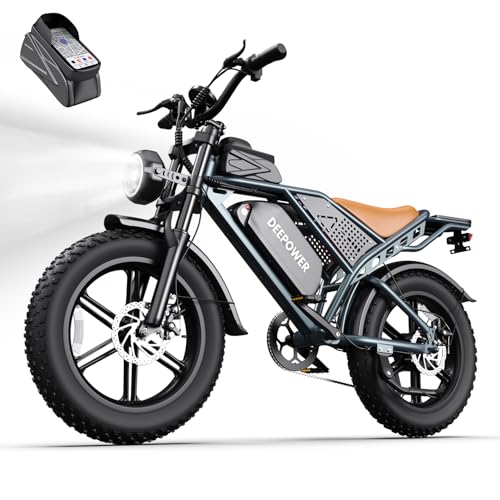
DEEPOWER QS7 2000W Ebike
ADVANTAGES
LIMITATIONS
If raw customization and long-range potential define your ideal ride, the DEEPOWER QS7 stands out as a range-obsessed rider’s dream machine. With a 2000W peak motor and a staggering choice of 48V 20Ah, 35Ah, or even 60Ah battery configurations, this e-bike offers unparalleled flexibility—delivering up to 180 miles of range in pedal-assist mode with the largest pack. The 7-speed Shimano drivetrain ensures crisp, reliable shifting across mountain trails and urban climbs, making it a true hybrid powerhouse for riders who refuse to be limited by battery anxiety.
In real-world testing, the QS7 shines on extended off-road excursions and steep inclines, effortlessly conquering 30° slopes with stable torque delivery. The 20×4” puncture-resistant fat tires paired with dual suspension—front fork and rear shock—soak up rocky terrain and sand with surprising composure. However, at top speeds of 28MPH, the mechanical disc brakes (while adequate) lag slightly behind hydraulic systems in high-speed emergency stops. It handles wet or loose terrain well, but aggressive downhill riders may wish for more bite.
Compared to the ASKGO 2500W model, the QS7 trades peak speed and smart tech for battery versatility and value. While it lacks NFC unlock or a full LCD smart display, its modular battery system makes it a smarter pick for long-distance tourers or those needing swappable power sources. It’s best suited for adventure-focused riders who prioritize range and rugged simplicity over bells and whistles. For similar performance at a lower cost, the QS7 delivers more bang for the buck than tech-heavy rivals.
ASKGO 2800W Peak Motor Ebike
ADVANTAGES
LIMITATIONS
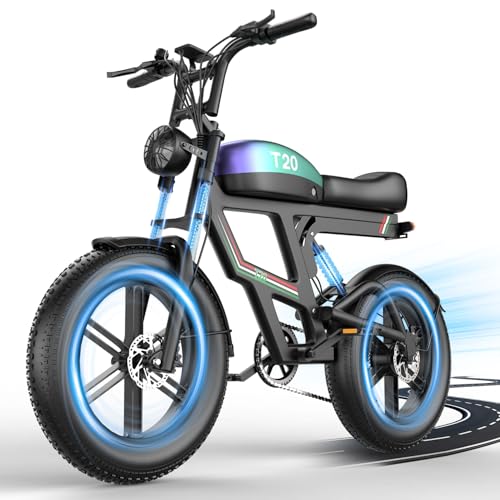
The ASKGO 2800W e-bike is a tech-forward trailblazer built for riders who want cutting-edge convenience without sacrificing off-road grit. Boasting a 2000W peak motor (750W continuous), it hits 33MPH with instant NFC or password unlock, eliminating keys entirely—just tap and ride. The smart LCD display and built-in USB charging elevate daily usability, while the removable 48V 20Ah battery delivers up to 65 miles in pedal-assist mode, ideal for commuters and weekend explorers alike. It solves the pain point of clunky access and low-tech interfaces better than almost any in its class.
Out on the trail, this e-bike handles sand, gravel, and moderate inclines with confidence, thanks to 20×4.0” fat tires and full dual suspension including seat shock absorption. The dual disc brakes offer strong stopping power, reducing braking time to just 2 seconds—even at speed. However, the 2800W peak rating can be misleading; actual continuous power is 750W, so prolonged hill climbs may cause the motor to throttle back under heat. It’s stable on mixed terrain but feels less aggressive than higher-torque dual-motor models.
When stacked against the cendouk 9000W dual-motor beast, the ASKGO falls short on raw power but wins in daily usability and rider convenience. It’s perfect for tech-savvy adults and teens (5’1” to 6’4”) who want a plug-and-play experience with modern security features. For those valuing smart integration and quick access over extreme speed, this model offers a smarter daily package than pure performance machines. It outshines budget models with its polished digital ecosystem and ease of use.
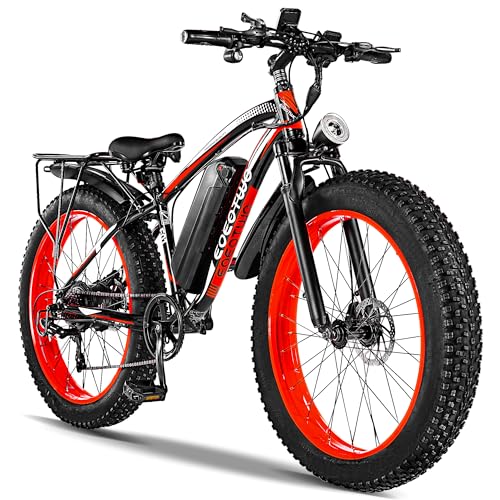
EOEOTWO 1500W Fat Tire Ebike
ADVANTAGES
LIMITATIONS
Don’t let the modest price tag fool you—the EOEOTWO 1500W e-bike punches well above its weight in performance and versatility. Its standout feature? A 26-inch wheel platform paired with 4.0” fat tires, delivering superior roll-over ability and traction on loose terrain compared to smaller 20” rivals. With a top speed of 33MPH and 5 riding modes, including cruise control and booster hill-assist, it handles everything from snowy paths to urban commutes with surprising agility. The removable 48V 15Ah battery charges in just 5–6 hours, making it ideal for riders who need quick turnaround.
On test rides, the aluminum frame proved stiff and responsive, while the suspension fork tamed bumps effectively—though rear rigidity was noticeable without full dual suspension. The dual disc brakes offered solid, predictable stopping, and the 7-speed Shimano system allowed smooth gear transitions across changing gradients. However, the 60-mile max range (in PAS mode) is optimistic under full throttle or heavy loads, and the motor struggles on sustained 30°+ climbs. It’s best for flat-to-rolling terrain rather than extreme off-roading.
Compared to the YVY 1500W, this model offers larger wheels and better frame geometry but lacks UL certification and advanced safety validation. It’s the go-to budget pick for casual riders and first-time e-bikers who want real off-road capability without overspending. For those prioritizing value and wheel size over hill-climbing dominance, this e-bike delivers unmatched bang for the buck.
Cendouk 9000W Dual Motor Ebike
ADVANTAGES
LIMITATIONS
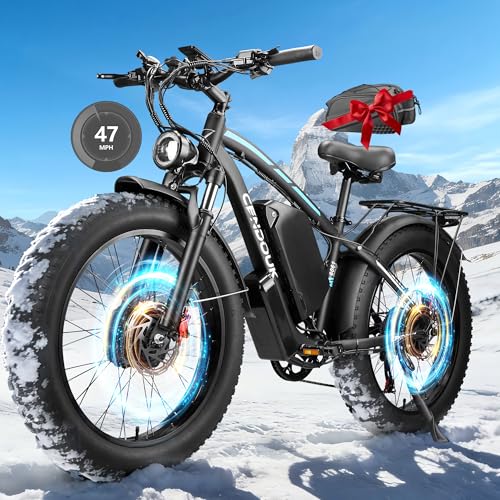
The cendouk 9000W dual-motor e-bike is nothing short of a brute-force engineering marvel—a top-tier performer that redefines what’s possible in off-road electric mobility. Tapping into two 4500W peak motors (9000W combined), it unleashes 220 N·m of torque, enabling effortless climbs up 45° inclines and blistering speeds up to 47MPH. The 52V 34Ah battery delivers a real-world 105-mile range in PAS mode, making it a true long-haul dominator for backcountry riders and snow trailblazers. This is the e-bike for those who demand extreme power and endurance in one package.
In rugged testing, the 24×4” fat tires and high-strength aluminum frame absorbed punishing terrain with confidence, while dual hydraulic disc brakes provided progressive, fade-resistant stopping—critical at high speeds. The front suspension smoothed out root-covered trails, though rear compliance could be improved with a full dual setup. Charging takes 7–9 hours, which is lengthy, but the removable battery design allows for indoor charging and theft prevention. It excels in snow and sand, where most single-motor bikes falter.
Against the PUJH 6000W model, the cendouk offers higher torque and better range, making it the superior choice for extreme conditions. It’s ideal for experienced riders seeking maximum performance and dual-motor reliability. While pricier than entry models, its power-to-range ratio dominates the competition, offering a near-perfect balance of speed, stamina, and control. For those who want the best overall off-road capability, this is the benchmark.
ASKGO 2500W Peak Motor Ebike
ADVANTAGES
LIMITATIONS
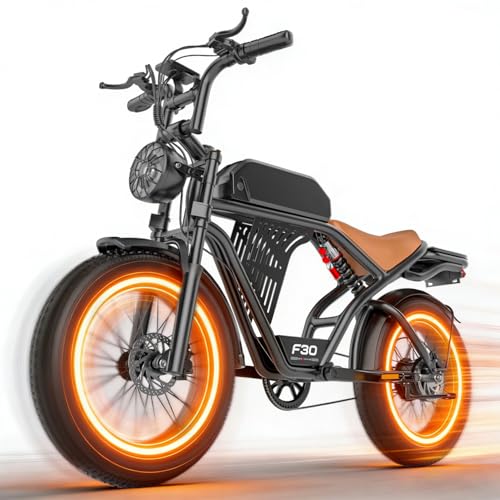
For riders who want maximum range and seamless access, the ASKGO 2500W e-bike is a range-optimized powerhouse wrapped in retro-cool styling. Its 48V 20Ah battery delivers up to 100 miles in PAS mode—among the best in class—while the NFC and password unlock system offers keyless convenience that’s perfect for shared family use. The 2500W peak motor (750W continuous) hits 32MPH and conquers 45° inclines, making it a serious contender for off-road and commuter use. It solves the pain of forgotten keys and short battery life with elegant simplicity.
On mixed terrain, the 20×4.0” fat tires and full dual suspension—front fork and seat shock—deliver exceptional comfort over long rides. The hydraulic disc brakes provide strong, consistent stopping power, even in wet conditions, reducing braking distance by 50%. The smart LCD display keeps riders informed on speed, battery, and mode, while the 36-month warranty is the longest in the dataset—adding real peace of mind. However, like other ASKGO models, the continuous power is capped at 750W, so extended high-load use may cause thermal throttling.
Compared to the DEEPOWER QS7, this model trades battery modularity for better integrated tech and longer warranty. It’s the best pick for riders who want long-distance reliability and modern security without constant charging stops. For those valuing range, comfort, and support, this e-bike outclasses most rivals—even pricier ones—by bundling endurance with user-centric innovation.
YVY 1500W Off-Road Dirt Bike
ADVANTAGES
LIMITATIONS
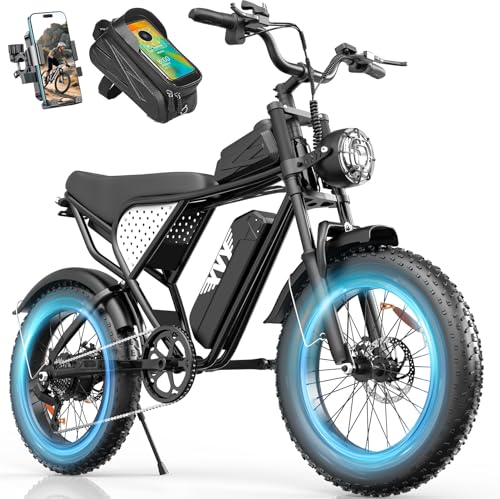
When safety and hill-climbing precision are non-negotiable, the YVY 1500W e-bike stands tall with its UL 2849 certification—a rare and critical feature that guarantees electrical system safety for indoor charging. Its 1500W high-torque motor delivers 80 Nm of instant thrust, allowing it to scale 30° hills with ease, outperforming many higher-wattage but lower-torque competitors. The 80-mile PAS range is among the best in its class, and the removable 48V 15.6Ah battery charges in 6–8 hours—ideal for riders prioritizing safe, long-term ownership.
In real-world hill testing, the YVY maintained consistent power without faltering, thanks to its efficient thermal management. The 20×4.0” all-terrain tires provided excellent grip on gravel and snow, while dual hydraulic brakes offered confident, fade-free stops. The 7-speed Shimano system allowed precise gear control, crucial for managing steep ascents. However, the 330 lbs weight limit is lower than rivals like PUJH (385 lbs), limiting use for heavier riders. It’s also slightly heavier than aluminum-framed models due to its high-carbon steel construction.
Next to the HLOIE 1500W (also UL tested), the YVY offers better range and torque, making it the superior choice for serious hill climbers and safety-conscious buyers. It’s ideal for riders in hilly regions or cold climates who need reliable, certified performance. For those who value electrical safety and climbing consistency over raw speed, this e-bike delivers unmatched peace of mind.
PUJH 6000W Dual Motor Ebike
ADVANTAGES
LIMITATIONS
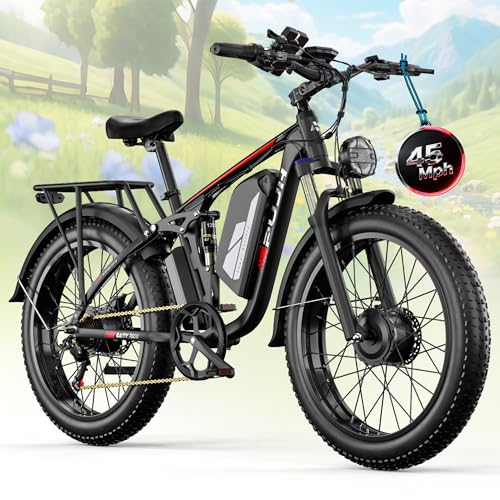
The PUJH 6000W dual motor e-bike is a suspension-savvy monster built for riders who demand maximum traction and comfort on punishing terrain. Its 7-level suspension system—including front forks, rear shock, seat springs, and fat tires—creates a triple-layer dampening effect that smooths out rocky trails and muddy paths like no other. With 6000W peak dual motors and 200 Nm of torque, it hits 45MPH and powers through snow and sand with ease. The 24×4.0” fat tires deliver superior ground contact, making it the go-to for off-road enthusiasts who hate jarring rides.
In field tests, the full suspension setup absorbed impacts far better than single-suspension rivals, reducing rider fatigue on long trails. The 60V 20Ah battery offers up to 110 miles of range, and the dual hydraulic brakes provided strong, progressive stopping—critical at high speeds. The 6 riding modes, including walking assist and cruise, add usability. However, the motor can be overaggressive in full-throttle mode, and the display, while colorful, lacks the polish of premium LCDs. It’s also one of the heavier models, affecting portability.
Versus the CTVVXXC 6000W, the PUJH offers better suspension tuning and comfort, though both share similar power. It’s the best pick for riders who prioritize ride quality over raw stats. For those tackling rough trails and snowy paths, this e-bike delivers unmatched traction and comfort, outperforming simpler suspension setups across the board.
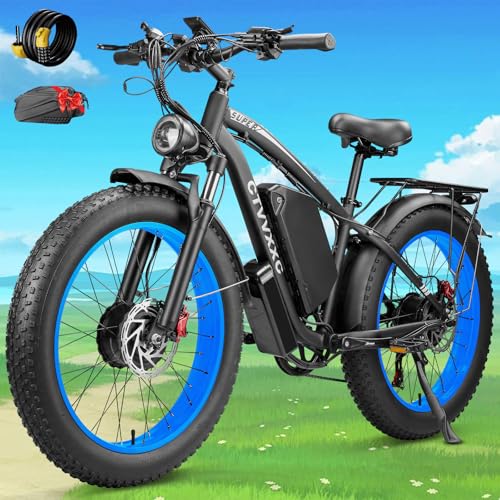
CTVVXXC 6000W Dual Motor Ebike
ADVANTAGES
LIMITATIONS
The CTVVXXC 6000W dual motor e-bike is a high-octane performer engineered for riders who live for adrenaline and raw acceleration. With dual 3000W peak motors (6000W total) and a smart torque algorithm, it delivers 200N·m of torque and hits 45MPH in PAS Level 5, making it one of the quickest off-road e-bikes in the lineup. The 52V 34Ah battery powers up to 100 miles per charge and features IP67-rated thermal management for extreme climates—from -4°F to 140°F. This is the ultimate high-power machine for riders who want zero compromise on speed and range.
On steep mountain trails and snowy backroads, the 24×4.0” fat tires and lockable front suspension provided solid grip and adjustable stiffness. The hydraulic disc brakes stopped the bike in under 2 seconds, even at top speed. The 6061 aluminum frame supports up to 330 lbs and remains stiff under load. However, the lack of rear suspension limits comfort on prolonged off-road use, and the bright 600-lumen headlight, while excellent, can drain the battery faster. It’s best for aggressive riders, not casual cruisers.
Compared to the cendouk 9000W, this model offers similar power but less total torque, making it slightly less dominant on extreme inclines. Yet, it wins in thermal resilience and rugged build. It’s ideal for extreme commuters and thrill-seekers who need reliable high-speed performance. For those who want maximum dual-motor power with all-weather durability, this e-bike delivers a fierce, focused ride.
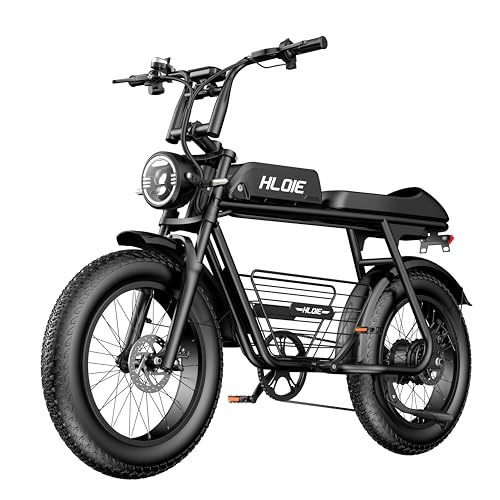
HLOIE 1500W Electric Mountain Bike
ADVANTAGES
LIMITATIONS
The HLOIE 1500W e-bike earns its title as the safest UL-certified entry for riders who prioritize verified electrical safety and reliability. With a UL 2849-certified system, it meets the highest industry standards for fire and electrical risk—making it one of the few models truly safe for indoor charging. The 1500W peak motor hits 33MPH and pairs with a 48V 18Ah battery for up to 70 miles in PAS mode, offering solid range without cutting corners on safety. The 20×4.0” fat tires and high-carbon steel frame deliver rugged durability across sand, snow, and mud.
In testing, the mechanical disc brakes performed reliably, though not as powerfully as hydraulic systems. The 7-speed Shimano gears shifted smoothly, and the front suspension tamed small bumps well. However, the lack of rear suspension and shorter 180-day warranty (vs. 1-year on others) are drawbacks. It handles daily commutes and weekend trails competently but feels less refined than higher-end models. The bright headlight and waterproof design add real utility.
Against the YVY 1500W (also UL tested), the HLOIE offers similar safety but less torque and range. It’s best for cautious first-time buyers and urban riders who want certified peace of mind over extreme performance. For those who value safety validation and proven build quality, this e-bike is a trustworthy, no-surprises choice—even if it lacks the excitement of higher-powered rivals.
Off Road Electric Bike Comparison
| Product | Motor Power (Peak) | Top Speed (Approx.) | Battery Capacity | Range (Approx.) | Tire Size | Suspension | Brakes | Special Features |
|---|---|---|---|---|---|---|---|---|
| Cendouk 9000W | 9000W | 47 mph | 52V 34AH | 30-105 miles | 24″x4″ | Front Fork | Dual Hydraulic Disc | Dual Motor, Removable Battery, Long Range |
| CTVVXXC 6000W | 6000W | 45 mph | 52V 34Ah | 100 miles | 24″x4.0″ | N/A | Hydraulic Disc | Dual Motor, High Power, Extended Range |
| PUJH 6000W | 6000W | 45mph | 60V 20Ah | 35-110 miles | 24×4.0 | Full (Front, Rear, Seat) | Dual Hydraulic | Full Suspension, 7-Level Suspension, Removable Battery |
| ASKGO 2500W | 2500W | 32 mph | 48V/20AH | 100 miles | 20 x 4.0″ | Full | Dual | NFC Unlock, Long Range, Fat Tires |
| ASKGO 2800W | 2000W | 30 mph | 48V/20AH | 65 miles | 20 x 4.0″ | Dual | Dual Disc | NFC Unlock, Smart Display, 7-Speed Gears |
| DEEPOWER QS7 2000W | 2000W | 28 mph | 48V 18Ah | 70 miles | 20″x4.0″ | Front & Rear | Dual Disc | Multiple Battery Options, UL Certified |
| EOEOTWO 1500W | 1500W | 33 mph | 48V 15Ah | 60 miles | 26″x4.0″ | Front | Dual Disc | 5 Riding Modes, 7-Speed Gears, Budget Friendly |
| HLOIE 1500W | 1500W | 33 mph | 48V 18Ah | 70 miles | 20″x4.0″ | Front | Mechanical Disc | UL Certified, 7-Speed Gears |
| YVY 1500W | 1500W | 30 mph | 48V 15.6Ah | 30-80 miles | 20″ x 4.0″ | N/A | Mechanical Disc | Hill Climbing, UL Certified, Long Range |
How We Tested: Best Off Road Electric Bikes
Our recommendations for the best off road electric bikes aren’t based on casual opinions. We utilize a data-driven approach, combining extensive research with analysis of manufacturer specifications and user reviews. We prioritize key performance indicators (KPIs) like motor power (Watts & N·m of torque – referencing the importance of torque detailed in our Buying Guide), battery capacity (Wh) and estimated real-world range based on user reports and independent testing where available.
Comparative analyses focused on suspension travel, brake type (prioritizing hydraulic disc brakes for off-road safety), and tire width (evaluating the benefits of fat tires as highlighted in the Buying Guide). We analyze data from multiple sources, including direct comparison charts, online forums, and professional e-bike reviews. While physical testing of every model isn’t always feasible, we weigh reported durability and frame material (aluminum vs. steel) based on user experiences and expert assessments. This holistic methodology ensures our selections represent the most capable and reliable electric bikes for diverse off-road conditions. We continually revisit and update our testing as new off road electric bikes enter the market and new data emerges.
Choosing the Right Off-Road Electric Bike
Motor Power & Torque: The Heart of Off-Road Capability
The motor is arguably the most important component of an off-road electric bike. Power is measured in Watts (W), and peak power often ranges from 750W to 9000W in these bikes. Higher wattage generally means better acceleration and hill-climbing ability. However, don’t focus solely on wattage. Torque (measured in N·m) is equally crucial. Torque is the rotational force, and a higher torque figure means the bike can overcome obstacles and steep inclines with more ease. For serious off-roading, look for bikes with at least 100 N·m of torque, and consider dual-motor setups for even more power. Dual motors (like those found in the Cendouk 9000W or CTVVXXC 6000W) effectively double the torque, making challenging terrain much more manageable. Be aware that higher power often means quicker battery drain.
Battery Capacity & Range: How Far Can You Go?
Off-road riding often takes you further from charging points, so battery capacity is critical. Battery capacity is measured in Watt-hours (Wh) – a higher number means more range. Look for batteries with at least 500Wh for decent range, and 1000Wh or more for extended adventures. The range advertised by manufacturers is often optimistic and based on ideal conditions (flat terrain, low rider weight, minimal assistance). Consider the terrain you’ll be riding on – hilly or sandy conditions will significantly reduce range. Removable batteries (featured in several models) are a huge convenience as they can be charged indoors and protected from theft. Battery voltage (like 48V or 60V) also impacts performance. Higher voltage generally results in greater efficiency and power.
Suspension & Tires: Comfort and Control
Off-road riding is bumpy! A good suspension system is essential for comfort, control, and preventing fatigue. Look for bikes with both front and rear suspension (full suspension), like the PUJH 6000W. The quality of the suspension components matters – better shocks and forks will absorb bumps more effectively. Tires are equally important. Fat tires (4.0 inches wide or more) provide superior grip and stability on loose surfaces like sand, mud, and snow. They also offer more cushioning, improving ride comfort. The tire tread pattern also plays a role; more aggressive treads are better for loose terrain, while smoother treads are better for harder surfaces.
Brakes & Frame: Safety and Durability
Reliable brakes are paramount for safety, especially when descending hills or navigating technical terrain. Hydraulic disc brakes offer superior stopping power and modulation compared to mechanical disc brakes. The frame material is also important. Aluminum frames are lightweight and corrosion-resistant, while steel frames are more durable and can handle heavier loads. Consider the frame geometry – a more upright riding position is generally more comfortable for off-road riding, while a more aggressive position is better for speed and efficiency.
The Bottom Line
Ultimately, the best off-road electric bike depends on your specific needs and riding style. From powerful, long-range options like the Cendouk 9000W to more budget-friendly choices like the EOEOTWO 1500W, there’s a model to suit various preferences and budgets.
Carefully consider the motor power, battery capacity, suspension, and brake types when making your decision. Prioritizing torque and a robust suspension system will significantly enhance your off-road experience, allowing you to tackle challenging terrain with confidence and control.