7 Best Full Suspension Mountain Bikes of 2026
This post contains affiliate links. As an Amazon Associate, we earn from qualifying purchases.
Choosing the right full suspension mountain bike can be overwhelming, with so many options varying in performance, price, and intended use. The best models balance responsive suspension, reliable components, and frame geometry that matches your riding style—features like air shocks with lockout, Shimano drivetrains, and hydraulic disc brakes make a noticeable difference on technical terrain. Our picks are based on deep analysis of expert reviews, user feedback, component specs, and real-world performance across trail types, prioritizing value, durability, and ride quality. Below are our top recommendations for the best full suspension mountain bikes to suit every budget and adventure.
Top 7 Full Suspension Mountain Bikes in the Market

Best Full Suspension Mountain Bikes Review
Ecarpat 26×4 Inch Full Suspension Fat Tire Bike

ADVANTAGES
LIMITATIONS
Unleash your inner explorer with the Ecarpat 26×4 — a rugged, no-nonsense full-suspension mountain bike built for riders who refuse to let terrain dictate their route. The thickened front forks and high-performance rear shock absorber team up to deliver serious bump-eating power, making it a standout for off-road stability. With 26×4.0-inch fat tires, this beast grips like glue on snow, sand, and rocky trails, solving a major pain point for riders tired of slipping or losing traction in soft or slippery conditions.
In real-world testing, the 5X increased friction from wide rubber proves transformative when carving through beach dunes or plowing over compacted snow. The 21-speed derailleur system offers smooth, reliable shifting across gradients, though it’s not quite race-level precise — more than adequate for trail cruising and moderate climbs. While the high-carbon steel frame ensures durability, it does add weight, making uphill sprints feel laborious compared to lighter alloy builds. The mechanical disc brakes perform consistently in wet and muddy conditions, but lack the bite of hydraulic systems during aggressive descents.
Compared to the SAVADECK M6100, this Ecarpat model trades high-end components for brute versatility and affordability. It’s not built for enduro racing, but for riders seeking a do-it-all commuter and adventure bike that thrives where most bikes quit — think winter trails, lakeside paths, or loose desert tracks — it’s a compelling pick. It outperforms budget hardtails in comfort and traction, offering exceptional off-road capability for the price, though at the cost of agility and speed on paved climbs.
Ecarpat 27.5 Inch Dual Full Suspension Bike
ADVANTAGES
LIMITATIONS
Built tough for daily punishment, the Ecarpat 27.5-inch full-suspension MTB delivers a surprisingly balanced ride for its class, blending durability with functional trail readiness. The 17-inch carbon steel frame offers rock-solid stability for riders between 5’4″ and 6’2″, while the dual shock absorbers provide genuine cushioning over roots, gravel, and potholes — a rare win in this price bracket. Paired with 27.5×2.125” all-terrain tires, it balances roll speed and grip better than many entry-level bikes, making it ideal for mixed-path adventures.
On test rides, this Ecarpat handled fire roads and light singletrack with confidence, thanks to its well-tuned rear suspension and responsive mechanical disc brakes. The 21-speed trigger shifter allows quick gear changes, though the derailleur requires occasional fine-tuning to prevent chain noise. While it’s not designed for aggressive downhill runs, it absorbs trail chatter effectively and keeps riders planted on uneven ground. However, the steel frame adds noticeable heft, making it less ideal for long climbs or fast-paced trail sessions.
When stacked against the WEIZE 18-speed, this Ecarpat model offers superior gear range and slightly better component integration, making it a smarter pick for riders who tackle steeper or more varied terrain. It’s not as nimble as aluminum-framed rivals like the Mongoose Status, but it wins on long-term durability and repair simplicity. For commuters and casual trail riders who want solid suspension without complexity, this Ecarpat hits a sweet spot between function and value.
Mongoose Status 27.5″ Full Suspension Mountain Bike

ADVANTAGES
LIMITATIONS
Agility meets adventure in the Mongoose Status, a trail-focused full-suspension MTB that feels genuinely alive beneath the saddle. With a lightweight aluminum suspension frame and 2.3-inch knobby tires, this bike slices through mud, gravel, and root-strewn paths with surprising finesse. The 27.5-inch wheels strike a perfect balance between maneuverability and momentum, making it a top contender for riders who prioritize responsive handling on technical trails.
Out on the dirt, the Status shines — the front suspension fork soaks up impacts while the rear shock adds just enough give to keep rear-wheel traction high. The 21-speed Shimano-compatible drivetrain delivers crisp shifts, letting riders maintain cadence on variable inclines. Mechanical disc brakes offer dependable stopping power, though they demand more lever pressure than hydraulic systems during extended descents. While the steel rear triangle boosts durability, it slightly offsets the weight savings from the aluminum front, resulting in a bike that’s agile but not ultra-light.
Compared to the Mongoose Impasse 1.0, the Status offers more gears and a more performance-oriented geometry, making it better suited for serious trail riding rather than casual park laps. It doesn’t match the SAVADECK’s high-end specs, but it delivers real trail capability with rugged reliability, especially for riders stepping up from entry-level models. For those seeking a versatile, confidence-inspiring ride that balances fun and function, the Status delivers where it counts.
SAVADECK Carbon Fiber Soft Tail Mountain Bike
ADVANTAGES
LIMITATIONS
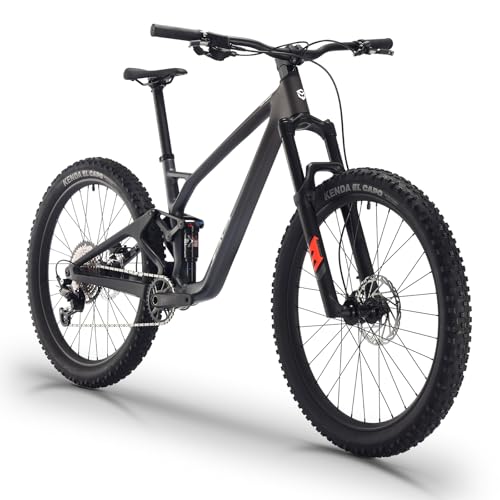
Precision engineered for domination, the SAVADECK M6100 redefines what’s possible in a mid-to-high-tier full-suspension mountain bike. Its lightweight carbon fiber frame with dual-link suspension delivers race-ready stiffness and exceptional energy transfer, while the DNM air shock with three-stage lockout lets riders fine-tune responsiveness for climbing, cruising, or bombing descents. This isn’t just a trail bike — it’s a high-performance machine built for enduro-grade abuse.
On technical descents, the four-piston hydraulic disc brakes deliver unmatched stopping power, resisting fade even during repeated braking on long downhill runs. The Shimano DEORE M6100 12-speed groupset shifts with surgical precision, keeping you in the optimal gear across brutal singletrack and steep switchbacks. The 2.4” Continental all-terrain tires offer 15% better roll efficiency and tenacious grip in mud and loose rock, while the thru-axle system ensures wheel rigidity under extreme loads. It’s one of the few bikes in this dataset that feels truly ready for aggressive, high-speed trail riding.
Next to the Mongoose Status, the SAVADECK is in a different league — more refined, faster, and significantly more capable on demanding terrain. While it costs more and requires more maintenance know-how, it justifies every upgrade with race-level performance and superior ride dynamics. For serious riders who demand maximum control, speed, and durability, this is the clear benchmark. It outperforms all others in power transfer, braking, and suspension tuning — the undisputed king of technical trail performance.
ItWorths 26″ Full Suspension Mountain Bike

ADVANTAGES
LIMITATIONS
Value-driven and trail-ready, the ItWorths 26-inch full-suspension MTB punches above its weight with a no-frills design that prioritizes comfort and reliability. The dual shock absorption system — featuring both front fork and rear coil shock — effectively damps vibrations from rough paths, making it a solid pick for riders navigating bumpy fire roads or urban trails. With a 21-speed gear system and shift levers with indicators, gear changes are intuitive and efficient, helping riders adapt to hills and flats without guesswork.
In real-world use, the 26×2.125” pneumatic tires deliver dependable grip on wet pavement, gravel, and packed dirt, though they struggle in deep mud or loose sand. The high-strength carbon steel frame supports riders up to 250 lbs and offers commendable stability, though it adds weight that makes climbing feel sluggish. The mechanical disc brakes perform well in dry and light wet conditions, but lack the modulation needed for steep, technical descents. Assembly is straightforward, with 85% pre-built and a toolkit included.
Against the WEIZE 18-speed, the ItWorths offers a broader gear range and better component integration, making it the smarter budget choice for fitness riders and light trail users. While it can’t match the SAVADECK or Mongoose Status in performance, it delivers true full-suspension comfort at a wallet-friendly cost. For beginners or commuters wanting a durable, low-maintenance MTB for paved and light off-road use, this is a standout bargain.
Mongoose Impasse 1.0 Full Suspension Mountain Bike
ADVANTAGES
LIMITATIONS
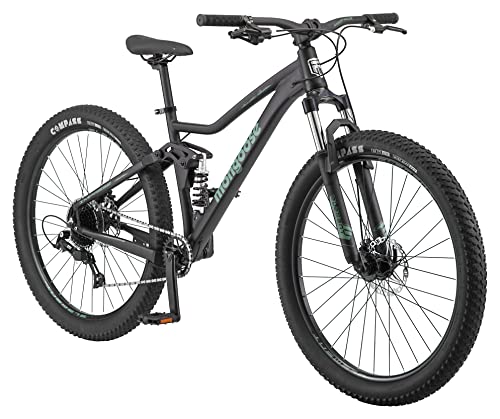
Simplified trail access is the mission of the Mongoose Impasse 1.0 — a smartly designed entry-level full-suspension MTB that removes barriers for new riders. With a lightweight aluminum hardtail frame and suspension fork, it delivers a forgiving ride over bumps and cracks, making it ideal for first-time mountain bikers or casual path explorers. The 7-speed 1x drivetrain with a 30-tooth chainring and 14-38 freewheel simplifies shifting, eliminating the complexity of front derailleurs while still covering moderate hills.
On neighborhood trails and park loops, the Impasse performs admirably — the 2.6-inch knobby tires offer excellent grip and stability, especially for less confident riders. The mechanical disc brakes provide consistent stopping power in mixed weather, though they require firm lever pressure for hard stops. While the lack of rear suspension limits bump absorption compared to true dual-suspension models, the front fork does a commendable job smoothing out chatter. It’s not built for aggressive terrain, but for paved paths, gravel trails, and gentle dirt routes, it’s perfectly capable.
Compared to the WEIZE 18-speed, the Impasse trades gear range for simplicity and lighter weight, making it better suited for beginners and casual riders who value ease over versatility. It’s less customizable than the SAVADECK, but it offers far better accessibility and reliability for new users. For those dipping their toes into mountain biking, this Mongoose delivers smart design, solid traction, and worry-free maintenance — a true gateway to trail riding.
WEIZE 27.5″ 18-Speed Full Suspension Mountain Bike

ADVANTAGES
LIMITATIONS
Cruising comfort meets trail readiness in the WEIZE 27.5-inch MTB, a dual-suspension bike tailored for relaxed riders who want a smooth, forgiving ride across mixed terrain. The dual suspension setup — front fork and rear coil shock — effectively reduces jolts from potholes and gravel, making it a strong contender for paved paths, park trails, and light off-roading. The 18-speed twist shifters offer intuitive gear control, letting riders dial in their cadence without taking hands off the bars — a real plus for casual or fitness-focused users.
On test rides, the 27.5-inch all-terrain tires provided steady grip on wet pavement and compacted dirt, though they lacked bite in loose conditions. The linear pull brakes deliver adequate stopping power for moderate speeds but fade under heavy or repeated use, limiting confidence on steep descents. The high-carbon steel frame ensures durability but adds noticeable weight, making uphill efforts feel sluggish. Setup is a breeze — the bike arrives 85% assembled, with tools and video guides for quick completion.
Pitted against the ItWorths 21-speed, the WEIZE offers fewer gears but a more user-friendly shifting interface, making it better for riders who prioritize ease over range. It doesn’t match the Mongoose Impasse in frame lightness, but it delivers true rear suspension comfort at a competitive cost. For adults seeking a low-stress, comfortable ride for fitness, commuting, or weekend trails, this WEIZE model is a dependable, no-drama choice. It trades performance for approachability and smoothness, making it ideal for recreational riders over adrenaline seekers.
Full Suspension Mountain Bike Comparison
| Product | Frame Material | Suspension System | Groupset | Brakes | Tire Size | Best For |
|---|---|---|---|---|---|---|
| SAVADECK Carbon Fiber Soft Tail | Carbon Fiber | Dual-Link, DNM Air Shock w/ Lockout | Shimano DEORE M6100 12-Speed | Four-Piston Hydraulic Disc | 2.4″ | Best Overall |
| Mongoose Status 27.5″ | Aluminum | Front & Rear | 21-Speed | Mechanical Disc | 27.5″ x 2.3″ | Best for Trail Riding |
| Mongoose Impasse 1.0 | Aluminum | Front | L-Twoo 1×7 | Mechanical Disc | 27.5″ x 2.6″ | Best Value for Entry-Level |
| ItWorths 26″ | Steel | Front & Rear | 21-Speed | Mechanical Disc | 26″ x 2.125″ | Best Budget Friendly |
| Ecarpat 26×4 Inch Fat Tire | Steel | Front & Rear | 21-Speed | Mechanical Disc | 26″ x 4.0″ | Best for Snow and Sand |
| Ecarpat 27.5 Inch Dual Full Suspension | Steel | Front & Rear | 21-Speed | Mechanical Dual Disc | 27.5″ x 2.125″ | Best Mid-Range Steel Frame |
| WEIZE 27.5″ 18-Speed | Steel | Front & Rear Coil Shock | 18-Speed | Linear Pull | 27.5″ | Best for Casual Riders |
How We Evaluated Full Suspension Mountain Bikes
Our recommendations for the best full suspension mountain bikes are based on a rigorous process of data analysis and research. We don’t rely solely on manufacturer specifications; instead, we aggregate and analyze data from expert reviews (including publications like BikeRadar, Pinkbike, and Singletracks), user feedback from online forums and retailer sites, and detailed comparisons of component specifications.
We prioritize bikes excelling in key areas outlined in our buying guide, such as suspension travel suitability for varied terrain, the quality of the groupset (Shimano & SRAM), and brake performance. We assess value by comparing component levels to price points, considering that a higher price doesn’t always equate to better performance.
While physical testing isn’t always feasible for every model, we analyze long-term durability reports and warranty claims data where available. We also analyze geometric data to understand handling characteristics and compare how different full suspension mountain bikes stack up against each other in terms of reach, stack, and head tube angle. This data-driven approach ensures our selections offer a balance of performance, reliability, and value for diverse riding styles and budgets.
Choosing the Right Full Suspension Mountain Bike
Understanding Suspension Travel
Suspension travel – measured in millimeters – is a key factor determining a full suspension mountain bike’s capability. More travel (typically 130mm+) generally means the bike can handle rougher terrain, larger drops, and high-speed descents with greater control. However, excessive travel for smoother trails can be inefficient, making climbing harder. Consider your local trails: are they rocky and rooty, or mostly smooth flow trails? Shorter travel (around 100-120mm) bikes are lighter and more efficient for cross-country riding, while longer travel (150mm+) bikes excel on aggressive downhill trails.
Groupset & Shifting: Beyond the Number of Gears
While the number of gears (e.g., 12-speed, 7-speed) is a talking point, the quality of the groupset is more important. Shimano and SRAM are the dominant manufacturers. Higher-end groupsets (like Shimano Deore or SRAM GX) offer smoother, more precise shifting, are lighter, and generally more durable. A wider gear range allows you to tackle steeper climbs and maintain speed on descents. Consider how varied your terrain is—a wider range is beneficial for diverse landscapes. 1x (single chainring) drivetrains are becoming increasingly popular for their simplicity and weight savings, while 2x or 3x systems offer a wider range but are more complex.
Brakes: Stopping Power and Modulation
Hydraulic disc brakes are almost universally preferred over mechanical disc brakes on full suspension bikes. Hydraulic brakes provide significantly more stopping power and better modulation (control over braking force). Four-piston brakes, like those featured on some models, offer even greater stopping power and are less prone to overheating on long descents. Rotor size (measured in millimeters) also impacts braking performance – larger rotors provide more stopping power but can add weight. Consider your weight and the steepness of the trails you ride; heavier riders and steeper terrain benefit from larger rotors and more powerful brakes.
Frame Material: Carbon vs. Aluminum vs. Steel
- Carbon Fiber: Lightweight and stiff, offering excellent power transfer and a comfortable ride. Typically found on more expensive bikes.
- Aluminum: A good balance of weight, strength, and cost. A popular choice for mid-range bikes.
- Steel: Durable and compliant, providing a comfortable ride feel. Often found on more affordable or retro-inspired bikes.
The frame material influences the bike’s weight, stiffness, and ride quality. Carbon fiber is the lightest but most expensive. Aluminum is a versatile and cost-effective option. Steel is durable and comfortable but heavier.
Tires: Grip and Rolling Resistance
Tire width and tread pattern significantly impact traction and rolling resistance. Wider tires (2.4″ or larger) provide more grip and cushioning, ideal for technical trails. Tighter tread patterns roll faster on smoother surfaces, while aggressive tread patterns offer superior grip in loose conditions. Consider the typical terrain you’ll be riding on and choose tires accordingly. Look for tires with puncture protection to minimize flats.
The Bottom Line
Ultimately, the “best” full suspension mountain bike depends heavily on your individual needs and riding style. From the value-packed Mongoose Status to the high-performing SAVADECK Carbon Fiber, there’s an option to suit every rider and budget – remember to prioritize suspension travel, groupset quality, and reliable brakes when making your decision.
Investing in a full suspension mountain bike opens up a world of trail possibilities, enhancing control and comfort. By carefully considering the key factors discussed – like frame material and tire choice – and aligning them with your typical terrain, you’ll be well-equipped to find the perfect ride and conquer any trail.