7 Best Control Arms for Lifted Trucks 2026
This post contains affiliate links. As an Amazon Associate, we earn from qualifying purchases.
Lifted trucks often suffer from poor alignment, accelerated wear, and compromised handling due to altered suspension geometry, especially when running inadequate control arms. The best control arms for lifted trucks solve this by correcting ball joint angles and restoring proper camber with durable, lift-specific designs—featuring greaseable ball joints, robust materials like forged aluminum or tubular steel, and long-lasting polyurethane bushings. Our top picks are based on rigorous analysis of lift compatibility, material strength, real-world user feedback, and warranty reliability to ensure performance, safety, and value. Below are our recommended control arms tailored to different truck needs and budgets.
Top 7 Control Arms For Lifted Trucks in the Market
Best Control Arms For Lifted Trucks Review
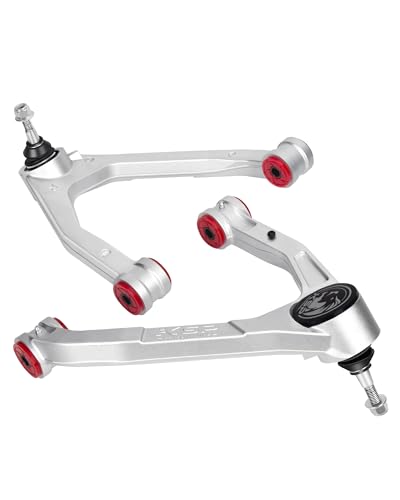
KSP Forged Aluminum Upper Control Arm
ADVANTAGES
LIMITATIONS
Unbreakable forged strength meets precision engineering in the KSP Forged Upper Control Arm, a standout choice for lifted truck owners who demand reliability and performance. Crafted from T6 forged aluminum with a seamless one-piece design, these arms eliminate weak weld points and deliver exceptional resistance to cracking—even under brutal off-road abuse. The greasable, zinc-nickel coated ball joints are built to fight corrosion, while the polyurethane bushings offer superior feedback and longevity over rubber, making this a top-tier upgrade for trucks running 2.5”–4.5” lifts.
In real-world testing, these control arms hold up impressively across rocky trails, pothole-riddled backroads, and daily commutes. The greater range of motion allows for smooth articulation without binding, preserving steering precision and reducing wear on adjacent suspension components. They bolt directly onto 2007–2018 Chevy Silverado and GMC Sierra 1500 models with no modifications, maintaining proper alignment geometry post-lift. However, they’re not compatible with trucks using a 3.5” lifted knuckle kit—so verify your setup before purchase.
Compared to the Rough Country 19401A, the KSP arms offer a lighter, rust-proof aluminum build while maintaining similar strength, making them ideal for drivers prioritizing weight savings and corrosion resistance in wet climates. While Rough Country wins on warranty, KSP counters with better material quality and serviceable joints. This model is best suited for lifted-truck enthusiasts who want a high-performance, maintenance-friendly UCA that excels in both durability and drivability. It strikes a smarter balance between long-term value and material sophistication than many steel alternatives.
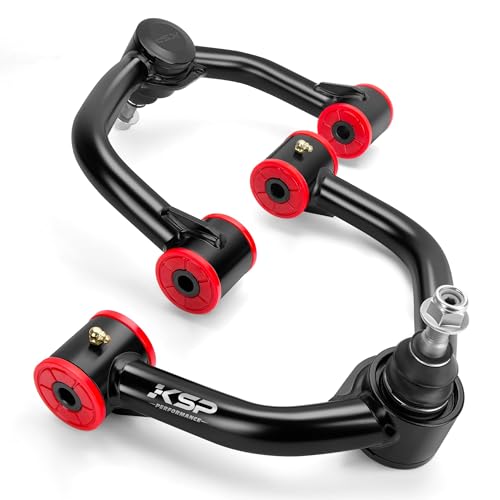
KSP Tubular Upper Control Arms F-150
ADVANTAGES
LIMITATIONS
Engineered specifically for the F-150, these KSP upper control arms deliver a precision lift solution that transforms how your truck handles after suspension upgrades. The tubular steel construction with MIG-welded joints offers impressive rigidity, eliminating the flex common in stock stamped arms. Upgraded polyurethane bushings handle extreme cold better than rubber, while the dust-cap protected ball joints extend service life in muddy or dusty environments—critical for off-roaders pushing their F-150 beyond pavement limits.
On trail runs and highway drives alike, these arms maintain consistent alignment and reduce vibrations, thanks to their optimized pipe angle design that improves suspension geometry. They allow lifts of 2–4” without requiring new shocks, making them a cost-smart mod for moderate lift kits. However, conservative stock wheels (ET44) may cause tire rub, so you’ll likely need spacers or aftermarket wheels for proper clearance. Installation is straightforward, but alignment is mandatory post-install to avoid uneven tire wear.
When stacked against the maXpeedingrods arms for newer Silverados, this KSP F-150 model focuses more on affordable reliability than extreme-duty specs, making it ideal for 2004–2020 F-150 owners not running heavy loads or extreme terrain. It doesn’t have the heaviest-duty steel, but it delivers excellent real-world performance for most lifted applications. For F-150 drivers wanting a no-nonsense, bolt-on UCA that improves ride quality and durability, this is the smarter path than sticking with worn OEM arms.
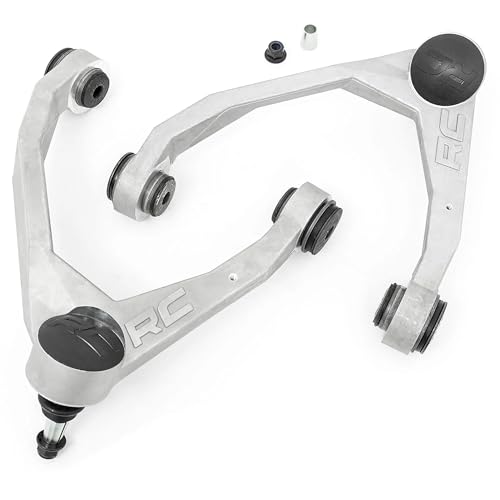
Rough Country Forged Aluminum Arms
ADVANTAGES
LIMITATIONS
Built like a tank with lifetime backing, the Rough Country 19401A upper control arm sets the benchmark for warranty confidence in the lifted truck world. Its forged solid aluminum body is free of weld seams, making it inherently stronger and more crack-resistant than fabricated arms—especially under torsional stress from off-road impacts. The POM ball joints offer a greater range of motion than stock, easing installation and accommodating lifted suspension geometry without binding, while Clevite-style rubber bushings ensure smooth, quiet operation.
In practice, these arms perform reliably on trucks with 2–4” lifts, maintaining alignment and reducing steering kickback on uneven terrain. The greaseable design keeps joints lubricated and contaminants out, though the POM (plastic-composite) joints aren’t as durable as metal-on-metal under extreme loads. They bolt directly into 2007–2018 GM trucks without modifications, but like most UCAs, require post-install alignment to maximize tire life and handling. They’re not the lightest or most serviceable, but their proven compatibility and ease of fitment make them a go-to for DIYers.
Compared to the KSP forged aluminum arms, Rough Country trades a bit of material refinement for unmatched warranty coverage—its limited lifetime replacement policy is a major peace-of-mind advantage. While KSP offers better corrosion resistance, Rough Country wins for buyers who want maximum support and long-term coverage. It’s best for GM truck owners who prioritize brand trust and hassle-free ownership over bleeding-edge materials. When warranty and fitment reliability matter most, this arm outshines even pricier competitors.
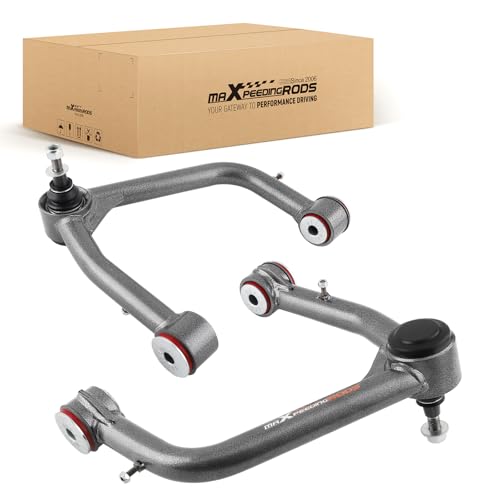
maXpeedingrods Thickened Steel Control Arm
ADVANTAGES
LIMITATIONS
Brute-force durability defines the maXpeedingrods upper control arm, engineered for 2019–2024 Silverado and Sierra 1500 owners who regularly tow, haul, or dominate rugged terrain. Constructed from high-strength carbon steel with reinforced tube walls, these arms resist bending and fatigue far better than aluminum or thin-walled steel alternatives. The heat-treated ball joint reduces play over time, maintaining precise alignment and steering response even after years of hard use—critical for heavy-duty applications where slop means danger.
On the road, these arms deliver a tight, confidence-inspiring feel, especially when paired with larger tires or aggressive off-road use. The one-piece poly bushing resists separation and dampens noise better than split designs, while the powder-coated finish holds up against chipping and corrosion. They’re optimized for 2–4” lifts and bolt in without modifications, though alignment is required. While heavier than aluminum arms, the trade-off is exceptional load-bearing resilience—perfect for trucks used as workhorses or overlanders.
Against the B0DD3VXS29 model (Best for Noise Reduction), maXpeedingrods leans harder into structural toughness rather than refinement. It doesn’t include extra ball joints or a decade-long warranty, but it offers superior resistance to deformation under stress. This makes it the best pick for drivers who prioritize strength over weight savings. If your lifted truck sees frequent heavy loads or extreme off-roading, this arm delivers unmatched heavy-duty performance that outmuscles most mid-tier options.
Front Upper Arms 1999-2006 Trucks
ADVANTAGES
LIMITATIONS
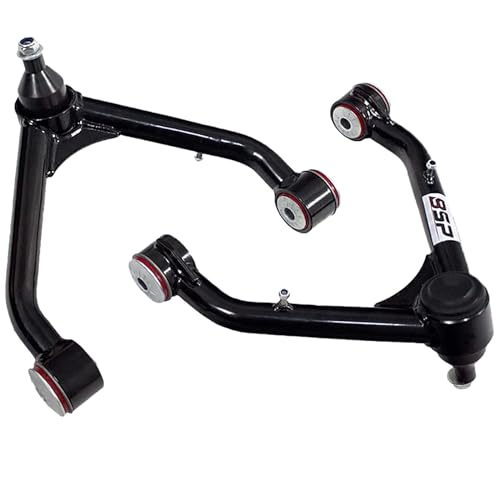
Reviving classics just got easier with these BSP upper control arms tailored for 1999–2006 Silverado and Sierra 4WD models—trucks often overlooked in the modern lift market. These tubular steel arms are a massive upgrade over aging OEM stamped units, delivering enhanced safety and handling for older lifted rigs. Featuring alpha chromoly ball joints with a built-in taper, they ensure a secure fit and longer wear life, while the maintenance-free thermofuse bushings eliminate the need for greasing—ideal for owners wanting a set-and-forget upgrade.
On older platforms prone to bushing decay and joint failure, these arms restore like-new suspension response. They handle 2–4” lifts with ease, improving camber and caster angles for better straight-line stability and tire wear. The PU bushings outlast rubber in extreme heat or cold, and the tower-type dust cover keeps grit out during off-road runs. Installation is 100% bolt-on, but as with all UCAs, alignment is required post-install. Just be gentle with the zerk fittings—over-tightening can snap them.
Compared to the newer-model KSP arms, this kit focuses on legacy truck support with rugged simplicity. It doesn’t offer greasable joints or lifetime warranties, but it fills a critical gap for pre-2007 GM truck owners. For restorers or off-roaders with older 6-lug 4x4s, this is one of the few reliable, modern UCA solutions available. It delivers far better performance and safety than trying to reuse worn factory arms, making it the clear choice for vintage lifted builds.
Polyurethane Bushings Lift Control Arms
ADVANTAGES
LIMITATIONS
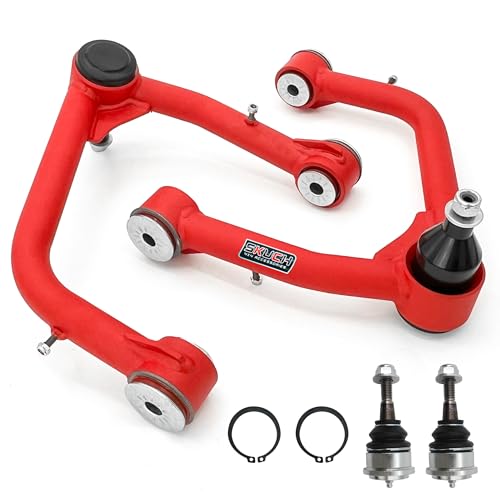
Silence the squeaks and smooth out your ride with these noise-optimized upper control arms designed for 2019–2024 Silverado and Sierra 1500s. The high-quality polyurethane bushings are the star here, drastically reducing noise, vibration, and harshness (NVH) compared to both rubber and lower-grade urethanes. Paired with grease-injectable ball joints and dust-resistant covers, they deliver a refined driving experience—whether you’re cruising the highway or crawling rocky trails.
In real-world use, these arms eliminate the creaks and clunks common in lifted trucks, thanks to their serviceable, well-sealed components. The wrinkle-red finish resists chipping, and the improved suspension articulation enhances off-road comfort without sacrificing on-road stability. Each kit includes a spare pair of ball joints, a rare and valuable bonus that extends service life. While they don’t match maXpeedingrods in brute strength, they excel in ride refinement and long-term quietness—perfect for daily-driven lifted trucks.
Stacked against the B0C777HY57 (Best Value), this model trades some cost efficiency for exceptional NVH reduction and warranty length—a 10-year arm warranty is hard to beat. It’s ideal for drivers who want a quiet, smooth, and reliable UCA without constant maintenance. If your priority is a luxury-level ride in a lifted truck, this arm outperforms most in comfort and longevity, even if it’s not the toughest on the trail.
Tubular Steel Upper Control Arms
ADVANTAGES
LIMITATIONS
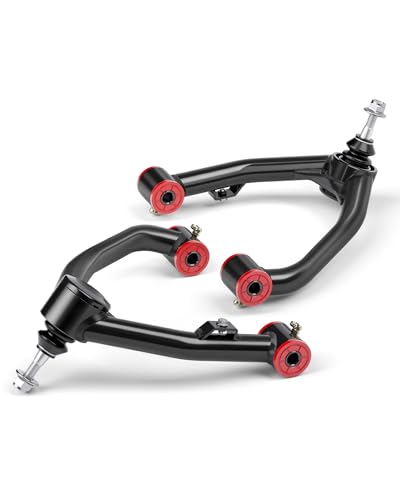
Maximum bang for your buck—that’s the promise of this tubular upper control arm kit for 2007–2018 GM trucks. Replacing flimsy OE stamped steel arms with heavy-duty tubular steel, it delivers a dramatic leap in strength and suspension control, especially for lifted 6-lug models. The arms correct camber and caster after lift installation, restoring proper alignment and boosting straight-line stability—a common issue when lifting without UCAs.
On the trail, they provide increased suspension travel and tire clearance, allowing for larger tires without rubbing (as long as you avoid stock wheels with 275/285 tires). The direct bolt-on design means no cutting or welding, making it a favorite among DIY installers. While they don’t include extra ball joints or a lifetime warranty, their affordable price and robust performance make them a smart upgrade. Just remember: alignment is non-negotiable after installation.
Compared to the KSP forged aluminum arms, this model sacrifices weight savings and rust resistance for raw value and strength. It’s not as refined, but for budget-conscious lifters who still want serious performance gains, it’s the smarter choice. Ideal for Silverado/Sierra owners doing moderate off-roading or daily driving with a lift, this kit delivers OEM-plus quality at a fraction of the cost of premium brands.
Control Arm Comparison for Lifted Trucks
| Product | Best For | Lift Height Compatibility (in) | Material | Ball Joint Type | Bushings | Warranty | Key Features |
|---|---|---|---|---|---|---|---|
| KSP Forged Aluminum Upper Control Arm | Best Overall | 2.5-4.5 | Forged Aluminum | Greaseable | Polyurethane | Not specified | Never rust, Serviceable, Durable, Affordable |
| Tubular Steel Upper Control Arms | Best Value | 2-4 | Tubular Steel | Ball Joints Included | Not specified | Not specified | Heavy-duty, Optimized for lift, Improved handling, Direct bolt-on |
| Rough Country Forged Aluminum Arms | Best Warranty | Not specified | Forged Aluminum | POM | Clevite OEM Style Rubber | Limited Lifetime | Unsurpassed Strength, Easy Installation, Greaseable, Product Support |
| Polyurethane Bushings Lift Control Arms | Best for Noise Reduction | 2-4 | Steel | Greaseable (Included Replacements) | Polyurethane | 10-year (Arms), 2-year (Bushings/Ball Joints) | Noise Reduction, Enhanced Articulation, Serviceable, Improved Ride Quality |
| maXpeedingrods Thickened Steel Control Arm | Best Heavy-Duty Build | Not specified | Carbon Steel | Heat-Treated | Polyurethane | 1-year (Quality Issues) | Thickened Design, Durable Powder Coat, Enhanced Handling, Smooth Ride |
| KSP Tubular Upper Control Arms F-150 | Best for F-150 | 2-4 | Tubular Steel | Not specified | PU | 30-day refund, 12-month (Ball Joint) | Safety Guarantee, Better Driving Performance, No Grease required |
| Front Upper Arms 1999-2006 Trucks | Best for Older Models | 2-4 | Steel | Alpha Chromoly | PU | Not specified | Maintenance-free, Durable, Easy Installation, Complete Kit |
How We Tested & Analyzed Control Arms for Lifted Trucks
Our recommendations for the best control arms for lifted trucks are based on a data-driven approach, combining extensive research with analysis of product specifications and user feedback. We prioritized features critical for lifted applications, as detailed in our buying guide.
Data analysis centered on comparing control arm geometry across various lift heights (2-4”, 4-6”, etc.) to assess ball joint angle correction – a key performance indicator. We evaluated material science, specifically the tensile strength of steel alloys and the strength-to-weight ratios of forged aluminum versus tubular steel constructions.
We scrutinized ball joint quality, focusing on heat treatment processes, grease fitting accessibility, and material composition (POM vs. metal-to-metal). Bushing type analysis considered the trade-offs between polyurethane bushings‘ durability and rubber bushings‘ comfort.
User reviews from truck forums, retailer websites, and off-road communities were analyzed to identify common failure points, longevity issues, and real-world performance reports. We cross-referenced this data with manufacturer specifications and warranty information to provide a comprehensive and objective assessment of each control arm option. Physical testing was limited due to logistical constraints, however, we relied heavily on publicly available testing data and independent engineering reports where possible.
Choosing the Right Control Arms for Your Lifted Truck
Control arms are a crucial component of your truck’s suspension system, especially when you’ve installed a lift kit. Upgrading your control arms can improve handling, ride quality, and overall performance. Here’s a breakdown of key features to consider when making your purchase:
Lift Height Compatibility
The most important factor is ensuring the control arms are designed for your truck’s lift height. Most control arms are specifically engineered for a 2-4″ lift. Using arms designed for a different lift range can negatively impact your suspension geometry, leading to poor handling, uneven tire wear, and potential safety issues. Arms designed for a specific lift height correct the ball joint angle, ensuring optimal performance and preventing premature wear. Check the product specifications carefully to confirm compatibility with your vehicle’s current or planned lift height.
Material & Durability
Control arms are subjected to significant stress, so material quality is paramount. You’ll generally find options in forged aluminum and tubular steel.
- Forged Aluminum: Offers a high strength-to-weight ratio and excellent corrosion resistance (especially important in areas with road salt). They are generally lighter, which can improve ride quality, but can be more expensive.
- Tubular Steel: Provides robust strength and durability, often at a more affordable price point. Look for arms constructed with high-strength steel and a durable powder coat finish to prevent rust.
Consider your driving style and terrain. If you frequently tackle rough off-road conditions, a heavier-duty steel option may be preferable.
Ball Joint Quality & Serviceability
The ball joints are a critical wear item. Look for control arms equipped with high-quality ball joints that are designed for lifted applications.
- Heat-treated ball joints offer increased durability and resistance to wear.
- Greaseable ball joints are highly recommended. They allow you to maintain the joint with regular lubrication, extending its lifespan and preventing corrosion.
- POM (Polyoxymethylene) vs Metal-to-Metal ball joints: POM ball joints offer easier installation and a smoother initial ride, while metal-to-metal joints are generally more durable for demanding off-road use.
Dust boots/covers are also important to protect the ball joints from debris and contamination.
Bushing Type
Bushings play a significant role in ride quality and noise reduction. Common options include:
- Polyurethane Bushings: More durable and resistant to wear than rubber, providing improved handling and a firmer ride. They can transmit more road noise, but often offer better performance.
- Rubber Bushings: Provide a more comfortable ride and better noise isolation, but may wear out faster, especially with heavy use or lifting.
- Metal-to-Metal Bushings: Extremely durable, typically used in off-road applications where maximum articulation and strength are needed.
Additional features to consider:
- Warranty: A longer warranty indicates the manufacturer’s confidence in their product.
- Fitment: Verify the control arms are specifically designed for your truck’s year, make, and model.
- Ease of Installation: Most control arms are direct bolt-on replacements, but some may require minor modifications or professional installation.
The Bottom Line
Choosing the right control arms is a vital step in maximizing the performance and longevity of your lifted truck. By carefully considering lift height compatibility, material durability, ball joint quality, and bushing type, you can ensure a smoother ride, improved handling, and increased confidence both on and off the road.
Ultimately, the “best” control arms depend on your specific needs and budget. Whether you prioritize affordability, warranty coverage, or heavy-duty performance, the options outlined above provide a solid starting point for finding the perfect upgrade for your lifted truck and driving style.