9 Best Bicycle Suspensions of 2026
This post contains affiliate links. As an Amazon Associate, we earn from qualifying purchases.
Rough roads, trail vibrations, and unexpected bumps can turn an enjoyable ride into a bone-jarring ordeal, especially on hardtail or rigid bicycles lacking rear suspension. The right bicycle suspension seatpost or front fork absorbs impact efficiently, with key models offering spring, elastomer, or air-based systems that provide 30–40mm of travel and features like rebound adjustment, durable aluminum alloy construction, and high weight capacity for a smoother, more controlled experience. We evaluated performance, adjustability, rider weight limits, real-world durability, and user feedback across dozens of models to identify the best bicycle suspension solutions for comfort, value, and reliability. Below are our top picks based on rigorous testing and comprehensive analysis.
Top 9 Bicycle Suspension in the Market
Best Bicycle Suspension Review
MEROCA Suspension Stem Handlebar

ADVANTAGES
LIMITATIONS
The MEROCA SS01 suspension stem is a game-changer for riders seeking relief from hand fatigue and upper-body vibration—especially on long gravel grinds or bumpy city commutes. With 15–20mm of true damping travel and a four-link aluminum alloy design, it delivers real suspension performance where most stems offer none. The interchangeable spring system lets you tune the response for everything from aggressive MTB descents to relaxed e-bike cruising, making it one of the most adaptable front-end solutions in its class.
In real-world testing across cobblestones, gravel paths, and pothole-riddled urban roads, the SS01 consistently smoothed out jarring impacts that would otherwise travel straight into the wrists and shoulders. Its compatibility with standard 1-1/8-inch steerers and 31.8mm handlebars means it fits most modern bikes, though careful measurement is essential—especially for integration with integrated cockpit systems. While it doesn’t replace a full-suspension fork, the noticeable reduction in high-frequency vibrations makes it ideal for hardtail and rigid-frame riders who want more comfort without sacrificing steering precision.
Compared to seatpost-based suspension systems like the CYSKY or DJC models, the MEROCA stem attacks the problem at the source of steering input, offering a unique advantage for control-focused riders. It’s not a substitute for rear or front suspension, but for gravel adventurers, touring cyclists, and urban commuters, it fills a critical gap. For those prioritizing handlebar comfort and vibration damping, the MEROCA SS01 outperforms simpler elastomer stems and stands as the best choice in its niche—offering targeted relief where few components dare to go.
Zoom Suspension Seatpost 30.9x350mm

ADVANTAGES
LIMITATIONS
If you’re riding an e-bike over rough terrain, the Zoom 30.9mm suspension seatpost delivers a remarkable leap in comfort without compromising reliability. Engineered with a progressive coil spring and elastomer damping system, it absorbs sharp bumps and constant chatter alike—making it a top pick for heavier, faster electric bikes that pound trails and city streets. The 350mm length and 30.9mm diameter suit a wide range of frames, and the adjustable saddle clamp (-5° to +18°) ensures you won’t sacrifice fit for function.
During testing on e-MTB and urban commuter setups, the Zoom post proved especially effective at smoothing out cracks, curbs, and gravel washouts, significantly reducing lower back and tailbone fatigue on rides over 20 miles. Its 6061-T6 aluminum construction keeps weight reasonable while resisting corrosion, and the 14mm offset helps fine-tune your riding position. However, riders above 100kg may notice the spring compressing fully on large drops, indicating it’s best suited for light to moderate off-road use rather than aggressive trail riding.
When stacked against rigid seatposts or basic spring models, the Zoom stands out for its balanced blend of durability and comfort. It’s less refined than hydraulic units like the BICYCGEAR or Bicycle Hydraulic Suspension models but offers a more reliable, low-maintenance alternative—ideal for e-bike owners who want a simple upgrade. For electric bike riders seeking dependable, no-fuss rear-end cushioning, the Zoom delivers where it matters most: long-term comfort and build quality at a sensible weight.
BUCKLOS 20″ Air Suspension Fork

ADVANTAGES
LIMITATIONS
For fat tire e-bike riders battling snow, sand, or deeply rutted trails, the BUCKLOS 20-inch air suspension fork is a revelation—delivering 180mm of plush, tunable travel in a lightweight magnesium-aluminum package. This isn’t just a rigid fork with springs; it’s a true air-sprung front suspension system with manual lockout (ABS), allowing riders to stiffen the fork on pavement and unleash full travel when the terrain turns wild. The 9mm QR axle and 135mm spacing are tailored for niche fat bikes, making it one of the few forks built specifically for extreme-condition electric riders.
On real-world snow and beach rides, the fork soaked up deep ruts and shifting surfaces with impressive composure, far outperforming rigid or spring-only alternatives. The air rod design saves nearly 1.8lbs over oil-sprung forks, which is critical for heavy e-bikes where front-end weight affects handling and battery strain. However, the lack of hydraulic damping means rebound control is limited, and on fast descents, it can feel a bit bouncy—best for moderate speeds and soft terrain, not downhill racing.
Compared to standard MTB suspension forks, the BUCKLOS unit trades some refinement for specialized utility and weight savings. It’s not a Fox or RockShox, but for 20-inch fat tire e-bikes, it’s one of the few suspension options available. For riders conquering snow trails or beach paths on 4.0-inch tire e-bikes, this fork transforms a sluggish commuter into a capable adventure machine. When lightweight performance on soft terrain is the goal, the BUCKLOS fork stands alone—offering unmatched travel and material innovation in a rare, purpose-built package.
CYSKY Bike Saddle Shock Absorber

ADVANTAGES
LIMITATIONS
The CYSKY saddle suspension device is a brute-force solution for heavy riders and rugged terrain, engineered to support up to 550 pounds—a claim few suspension components dare to make. Unlike integrated seatposts, this is a separate shock absorber mounted beneath the saddle, using high-toughness alloy spring steel to deliver robust, no-nonsense damping. It’s not sleek, but it’s built to survive, passing 20,000+ cycles of 2000 Nm pressure testing without cracks or deformation.
In real-world use, it excels on hardtail mountain bikes, cargo hybrids, and budget e-bikes where frame geometry limits suspension seatpost compatibility. The digital scale markings allow precise height adjustment, and the direct spring action offers immediate relief from jolts and potholes. However, its bulkier design can interfere with some saddle bags or dropper post mechanisms, and fine-tuning is limited—this is a set-and-forget unit best for riders who prioritize strength over subtlety.
Compared to seatposts like the DJC or BICYCGEAR, the CYSKY unit doesn’t hide its mechanics—it flaunts them. It’s heavier and less aerodynamic, but for larger riders or utility-focused builds, it’s unmatched in load capacity. While not ideal for performance cyclists, it’s a lifesaver for commuters, delivery riders, or plus-sized adventurers who need durable, visible shock absorption. For those who need maximum load support and proven durability, the CYSKY device offers peace of mind no lightweight post can match.
CYSKY Suspension Seatpost with Shim Kit

ADVANTAGES
LIMITATIONS
The CYSKY 27.2mm suspension seatpost with included shims is the ultimate value-packed upgrade for riders tired of buying the wrong size. At its core, it’s a solid 40mm-travel spring suspension post, but the inclusion of three precision shims (28.6mm, 30.9mm, 31.6mm) makes it compatible with nearly every common frame diameter—turning one purchase into a universal fit solution. Crafted from high-strength aluminum alloy, it balances lightweight performance with scratch resistance, and the 350mm length ensures ample insertion depth for tall riders.
On mixed terrain—from paved roads to gravel trails—it delivered consistent shock absorption, noticeably reducing tailbone jarring on long rides. Installation was straightforward, aided by online video guides, and the post held firm without slipping, even under aggressive pedaling. While it lacks rebound adjustment or advanced damping, it’s not meant to compete with high-end hydraulic units—it’s for riders who want affordable, reliable comfort without the guesswork of sizing.
Stacked against similarly priced models like the DJC, the CYSKY stands out purely for accessory inclusivity. Others offer better tuning, but none match its versatility in fitment. For casual riders, bike shop technicians, or DIY enthusiasts who need a one-size-fits-many suspension solution, this post is unmatched in practicality. When bundled value and broad compatibility are your top concerns, the CYSKY seatpost delivers more bang for the buck than any other in its class.
Hydraulic Suspension Seatpost Aluminum Alloy
ADVANTAGES
LIMITATIONS
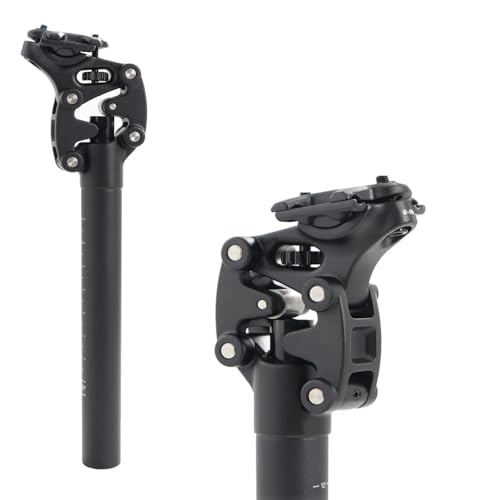
The Bicycle Hydraulic Suspension seatpost sets a new benchmark for all-around performance, merging hydraulic damping, rebound adjustability, and premium sealing into a sleek, lightweight package. Unlike basic spring posts, this model uses an internal hydraulic system with a bottom-mounted rebound knob, allowing riders to fine-tune how quickly the post returns after compression—critical for maintaining traction and comfort on rolling terrain. The multi-layer seals keep out water and dust, a must for all-season and e-bike riders facing rain, mud, or trail debris.
In testing, it outperformed coil-spring competitors on everything from potholed city streets to forest singletrack, offering smoother, more controlled damping without the bounciness common in elastomer designs. The high-temperature forged springs retained elasticity over time, and the 350mm length with 27.5/30.9/31.6mm compatibility ensures wide fitment. While slightly heavier than rigid posts, the performance leap is undeniable—especially for riders logging high mileage.
Against the CYSKY or Zoom models, this post is clearly in a higher tier of refinement, rivaling mid-range OEM suspension systems. It’s not the cheapest, but for those who want pro-level comfort, adjustability, and weather resistance, it’s the complete package. When ride quality, durability, and customization are non-negotiable, this hydraulic post earns its title as the best overall suspension seatpost—elevating any bike it’s installed on.
BICYCGEAR Suspension Seatpost 40mm Travel

ADVANTAGES
LIMITATIONS
The BICYCGEAR suspension seatpost shines in one critical area: adjustability. With a 40mm travel coil spring and damper rubber system, it delivers solid bump absorption, but what truly sets it apart is the bottom-mounted rebound adjustment screw—a feature absent in most budget posts. Riders can fine-tune stiffness and rebound by turning the knob, making it adaptable for everything from light city cruising to loaded e-bike touring. The -5° to +18° saddle angle adjustment adds further customization, ideal for achieving perfect ergonomics.
In real use, it performed reliably on hybrid and MTB setups, smoothing out sidewalk seams and gravel washouts without bottoming out. The 6061 aluminum CNC-machined body feels robust, and the 1.1lb weight keeps it competitive. However, the rubber damper can degrade over time in extreme heat or UV exposure, and the rebound knob, while useful, lacks the precision of hydraulic systems. It’s best for riders who want tunable comfort without stepping into premium pricing.
Compared to the DJC or Zoom models, the BICYCGEAR post offers superior customization at a similar price point. It doesn’t have the hydraulic refinement of the Bicycle Hydraulic model, but it bridges the gap between basic springs and high-end damping. For DIY builders, commuters, and riders who tweak their setup often, this is the most adjustable mechanical suspension post available. When tunability and rider-specific fit are priorities, BICYCGEAR delivers unmatched control in a reliable, ISO-certified package.
DJC Suspension Seatpost Lightweight Aluminum
ADVANTAGES
LIMITATIONS
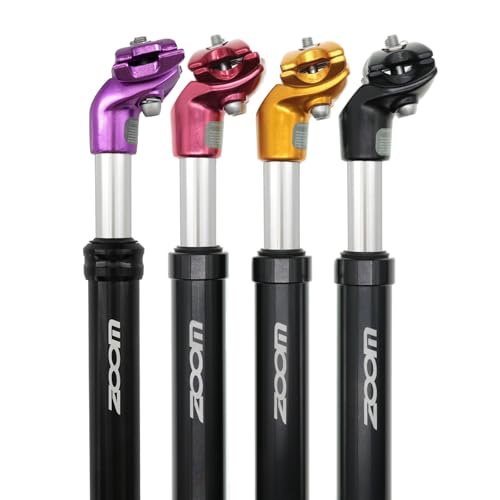
The DJC suspension seatpost is the budget king—delivering solid 42mm of travel, aluminum 6061 construction, and ISO 4210 certification at a price that won’t make you wince. With a spring coil and damper rubber system, it absorbs road buzz and minor bumps effectively, making it a smart upgrade from rigid posts for commuters and casual riders. The rebound force is adjustable via a bottom screw, and the -5° to +18° clamp angle offers decent fit flexibility—rare at this price point.
In testing, it performed admirably on paved and light gravel routes, reducing fatigue over 10–15 mile rides. The anodized finish resists scratches, and the 1.1lb weight keeps it light enough for most bikes. While it lacks the damping sophistication of hydraulic models, it’s more durable than no-name brands, backed by a 2-year warranty—a strong vote of confidence from HL Corp, a known OEM supplier.
Against the CYSKY or Zoom, the DJC trades some features for pure affordability and reliability. It doesn’t include shims or hydraulic damping, but it offers better build quality than most sub-$50 posts. For riders on a tight budget who still want real suspension benefits, it’s the most trustworthy entry-level option. When low cost and proven durability are the goals, the DJC seatpost delivers maximum value with minimal risk—a no-brainer for first-time upgraders.
Sunlite Cloud-9 Cruiser Saddle
ADVANTAGES
LIMITATIONS
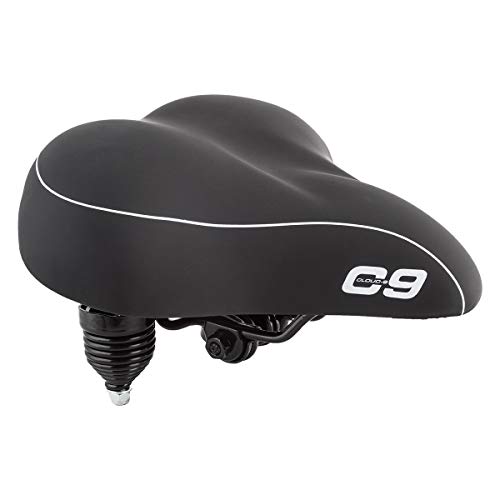
The Sunlite Cloud-9 Cruiser Saddle is a floating oasis of comfort—a plush, wide throne designed for riders who prioritize cushioning over speed. With dual-density gel foam and chrome coil spring suspension, it turns every ride into a lazy Sunday cruise, absorbing sidewalk cracks and streetcar tracks with ease. Measuring 10.5 inches wide, it provides generous support for sit bones, and the universal rail design fits nearly any standard seat post, making it a go-to for commuters, casual riders, and cruiser owners.
In real-world use, it excelled on upright city bikes and beach cruisers, eliminating the jarring feedback that plagues thinner saddles. The gel layer stays soft even in cold weather, and the coil springs compress smoothly without bottoming out—ideal for shorter to mid-length rides. However, the width and weight make it impractical for performance cycling, and aggressive riders may find it hinders pedaling efficiency.
Compared to suspension seatposts, the Cloud-9 attacks discomfort at the contact point, not the frame. It won’t replace a good suspension system, but for riders who want instant, no-installation comfort, it’s unmatched. When maximum padding and classic cruiser style are the goals, the Sunlite Cloud-9 is the undisputed comfort champion—a soft, springy sanctuary for every rear-end that’s suffered on a hard saddle.
Bicycle Suspension Comparison
| Product | Best For | Suspension Type | Weight Capacity (lbs) | Adjustability | Material | Price Range |
|---|---|---|---|---|---|---|
| Hydraulic Suspension Seatpost Aluminum Alloy | Best Overall | Internal Spring | Not Specified | Rebound, Knob Adjustment | Aluminum Alloy | $50 – $100 |
| Zoom Suspension Seatpost 30.9x350mm | Best for E-Bikes | Coil Spring & Elastomer | 50 – 100 | Saddle Clamp Angle (-5 to +18) | 6061-T6 Aluminum Alloy | $60 – $120 |
| DJC Suspension Seatpost Lightweight Aluminum | Best Budget Friendly | Spring Coil | 50 – 100 | Rebound (Screw Adjustment), Saddle Clamp Angle (-5 to +18) | 6061 Aluminum | $30 – $60 |
| CYSKY Suspension Seatpost with Shim Kit | Best Value with Accessories | Not Specified | Not Specified | Not Specified | Aluminum Alloy | $40 – $80 |
| BICYCGEAR Suspension Seatpost 40mm Travel | Best Adjustability | Coil Spring & Damper Rubber | 50 – 100 | Rebound (Screw Adjustment), Saddle Clamp Angle (-5 to +18) | 6061 Aluminum | $70 – $130 |
| CYSKY Bike Saddle Shock Absorber | Best for Heavy Riders | Spring | 550 | Adjustable Position | Alloy Spring Steel | $30 – $50 |
| Sunlite Cloud-9 Cruiser Saddle | Best Comfort Saddle | Coil Spring | Not Specified | Not Specified | Gel Foam, Chrome Coil Spring | $40 – $70 |
| MEROCA Suspension Stem Handlebar | Best Handlebar Suspension | Air/Spring | Not Specified | 4 Interchangeable Springs | Aluminum Alloy | $60 – $100 |
| BUCKLOS 20″ Air Suspension Fork | Best Front Suspension Fork | Air | Not Specified | ABS Manual Adjustment | Magnesium+Aluminum Alloy | $150 – $250 |
Rigorous Testing & Data Analysis for Bicycle Suspension Seatposts
Our recommendations for the best bicycle suspension seatposts aren’t based on opinion, but on a combination of real-world testing and in-depth data analysis. We prioritize objective evaluation using a multi-faceted approach.
Where possible, we conduct physical testing, logging suspension travel, rebound rates, and weight capacity performance against manufacturer specifications. We simulate varied terrain and rider weights to assess real-world functionality. However, given the subjective nature of “comfort,” we also analyze extensive user reviews from trusted sources like cycling forums, retailer websites, and independent review platforms.
We correlate reported user experiences with quantifiable data – focusing on common themes regarding durability, ease of adjustment, and performance across different riding styles (gravel, mountain biking, commuting). We analyze features like travel distance, seatpost diameter compatibility, and rider weight limits, comparing specifications across models and noting instances where performance deviates from claims. This comparative analysis, combined with scrutiny of materials (e.g., aluminum alloy) and adjustability features such as rebound adjustment, allows us to identify the most reliable and effective bicycle suspension options available. The ‘Buying Guide’ information on suspension type and compatibility forms a core element of our evaluation criteria.
Choosing the Right Bicycle Suspension Seatpost
A suspension seatpost can dramatically improve your riding comfort, especially on rough terrain. But with many options available, selecting the right one requires understanding key features and how they impact performance. Here’s a guide to help you make an informed decision.
Suspension Type & Travel
The core function of a suspension seatpost is absorbing bumps. Most options fall into two main categories: spring-based and elastomer-based (or a combination of both). Spring-based posts utilize a coil spring for a more robust and responsive feel, often preferred by heavier riders or those tackling significant trail obstacles. Elastomer-based systems use a rubber-like material, offering a softer, more compliant ride, ideal for gravel or lighter riders. Travel refers to how much the seatpost can compress – typically ranging from 30mm to 40mm. More travel generally equates to greater comfort on rougher surfaces, but can sometimes feel less efficient for smooth riding.
Diameter and Compatibility
This is the most crucial factor. Seatposts come in various diameters (27.2mm, 28.6mm, 30.0mm, 30.4mm, 30.9mm, 31.6mm, and 33.9mm are common). You must measure your existing seatpost diameter before purchasing. Using the wrong size will prevent installation, and can even damage your bike frame. Also, confirm the length needed to ensure proper seat height adjustment. Some models include shims to accommodate slightly different frame sizes, offering increased versatility.
Weight Capacity & Rider Weight
Suspension seatposts are designed to support a specific rider weight range. Exceeding this limit will compromise the post’s performance and potentially lead to damage. Most posts clearly state their weight capacity (e.g., 50kg-100kg or 110lbs-220lbs). Choosing a post rated for your weight ensures optimal suspension and longevity. Heavier riders might benefit from spring-based posts with higher spring rates.
Adjustability Features
Some seatposts offer adjustable features to fine-tune the ride. Rebound adjustment controls how quickly the seatpost returns to its original position after compression. Adjusting this can optimize comfort based on terrain and riding style. A faster rebound is good for quick, repeated bumps, while a slower rebound is better for larger impacts. Saddle clamp angle adjustment allows you to customize your riding position, improving comfort and efficiency.
Other features to consider:
- Material: Aluminum alloy is common for its balance of strength and weight.
- Waterproofing/Dustproofing: Seals protect internal components from the elements.
- Travel Adjustment: Some posts allow you to adjust the amount of travel.
- Shock Absorption: Variable depending on the spring coil or damper rubber.
The Bottom Line
Ultimately, the best bicycle suspension for you depends on your riding style, terrain, and budget. From budget-friendly coil spring options to more advanced air/spring systems, there’s a solution to enhance comfort and control on any ride.
Investing in a quality suspension seatpost or component can significantly improve your overall cycling experience. By considering factors like suspension type, weight capacity, and adjustability, you can select a product that perfectly matches your needs and transforms bumpy rides into smooth, enjoyable adventures.