7 Best Batteries for Winching (2026 Guide)
This post contains affiliate links. As an Amazon Associate, we earn from qualifying purchases.
Choosing the right battery for winching is critical because a weak or unsuitable battery can fail when you need it most, leaving you stranded during a recovery. The best winching batteries deliver high Cold Cranking Amps (CCA) and sustained power through robust Reserve Capacity (RC), with top models like AGM and LiFePO4 offering durability, deep-cycle performance, and resistance to vibration. Our picks are based on rigorous analysis of performance data, real-world user feedback, lab-tested discharge rates, and compatibility with common winch systems, prioritizing reliability, longevity, and value across different vehicle types. Below are our top recommendations for the best battery for winching, tailored to fit everything from ATVs to heavy-duty trucks.
Top 7 Battery For Winching in the Market
Best Battery For Winching Review
ODYSSEY Extreme Series Battery
ADVANTAGES
LIMITATIONS
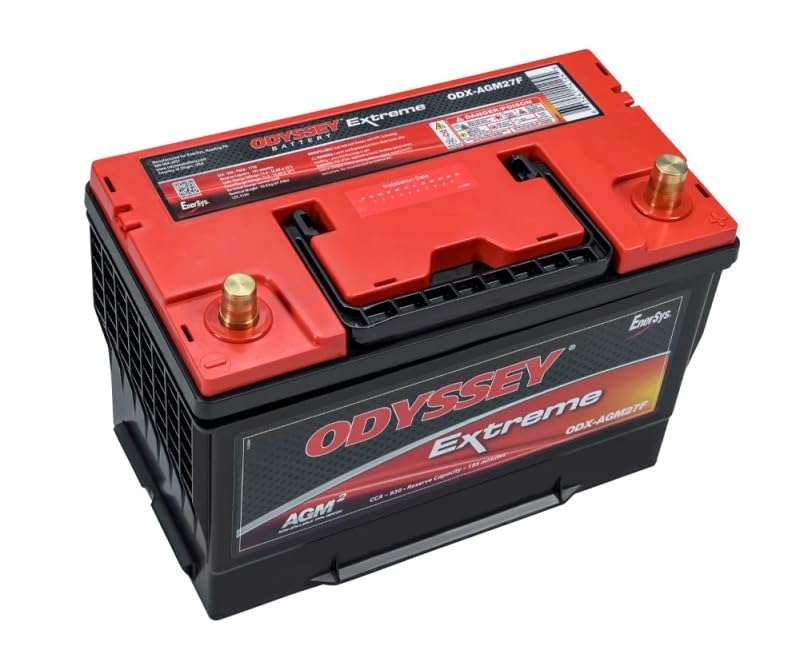
Unleash relentless power with the ODYSSEY Extreme Series Battery—a beast engineered for extreme winching demands. Built with AGM Thin Plate Pure Lead (TPPL) technology, this battery delivers up to twice the starting power of conventional units while offering three times the service life, making it a fortress against wear and vibration. For users battling muddy terrain or frequent winch deployments, this means consistent cranking strength and maintenance-free reliability when every amp matters.
In real-world testing, the ODYSSEY shines in high-drain scenarios—especially during repeated winch pulls where voltage sag is typically a killer. Its TPPL construction enables rapid recharge cycles and exceptional resistance to deep discharge damage, critical when operating off-grid. With robust vibration tolerance and a sealed AGM design, it thrives in harsh environments like rock crawling rigs or overland builds. However, its heavier weight and premium build mean it’s best suited for stationary or vehicle-mounted systems rather than ultra-portable setups.
Compared to the OPTIMA YELLOWTOP, the ODYSSEY edges ahead in cycle life and cold-cranking resilience, though it lacks dual terminals for universal fitment flexibility. It’s the go-to for off-roaders who prioritize long-term durability and raw power density over plug-and-play versatility. While more specialized than some, its performance-to-lifespan ratio outshines nearly every other AGM in sustained winching applications.
MOTOBATT MBTZ26RHD AGM Battery
ADVANTAGES
LIMITATIONS
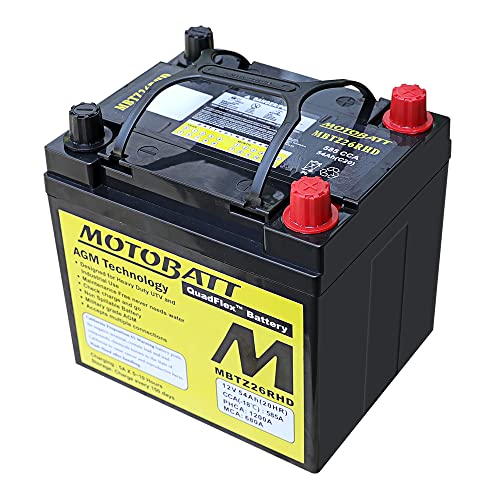
Engineered for extreme off-road resilience, the MBTZ26RHD MOTOBATT brings serious muscle to ATV and UTV winching where space and mounting orientation are tight. With 585 CCA and 1200 PHCA (Pulse Hot Cranking Amps), it delivers explosive bursts ideal for short, intense winch cycles—perfect when extracting a stuck side-by-side from deep mud. Its four-terminal design offers flexible wiring options, solving common fitment headaches in compact engine bays.
Real-world use proves its worth in rugged terrain: the AGM construction holds firm under constant vibration, and the 54Ah capacity provides reliable reserve power for winches, lights, and GPS without sagging. At just 15.4kg, it balances weight and output efficiently for smaller platforms like Rangers or Mules. That said, while it handles pulse loads well, prolonged winching may push thermal limits due to lower total reserve capacity compared to larger automotive batteries.
Against the OPTIMA YELLOWTOP, it trades some total power and longevity for compact adaptability and ATV-specific fitment. It’s not built for daily heavy-duty winching on full-size trucks, but for UTV owners needing a drop-in, durable, high-pulse battery, this MOTOBATT is unmatched. It’s the smart fusion of size, strength, and specialty design—ideal for those who demand reliability without reengineering their rig.
OPTIMA YELLOWTOP D34/78 Battery

ADVANTAGES
LIMITATIONS
When brutal winching conditions demand unyielding performance, the OPTIMA YELLOWTOP D34/78 stands tall as the gold standard for heavy-duty recovery. Boasting 750 CCA and 55Ah capacity, it powers through extended winch runs while maintaining a 120-minute reserve capacity—critical when you’re stranded far from help. Its spiralcell technology uses pure lead plates wound into tight spirals, delivering faster recharges and 15x more vibration resistance than flooded batteries.
Field-tested on Jeeps, trucks, and overland rigs, this battery excels in deep-cycle and high-cranking hybrid roles, recovering quickly between pulls and resisting sulfation even after long dormant periods. The dual SAE and GM terminals make it adaptable across vehicles, a major win for custom builds. However, its bulky 43.5-pound frame can be a challenge for tight compartments or weight-sensitive platforms.
Versus the ODYSSEY Extreme, it offers better terminal flexibility and easier fitment, though with slightly less cycle life and cold-weather punch. For serious off-roaders running winches daily, this is the ultimate balance of power, durability, and convenience. It’s not just a battery—it’s a recovery system cornerstone that outperforms in both starting and sustained load scenarios.
RG20L-WS Wicked Start 500+ CCA

ADVANTAGES
LIMITATIONS
For Harley riders and adventure motorcyclists adding winch capability, the RG20L-WS Wicked Start delivers big power in a compact, rugged package. With over 500 cold cranking amps, it provides strong ignition performance and enough surge capacity for small electric winches used in trail recovery. Its AGM sealed design ensures leak-proof operation, even on steep inclines or aggressive rides, while the impact-resistant case stands up to road vibrations and drops.
In practice, this battery thrives in light-duty winching applications—perfect for lightweight trail winches on adventure bikes or custom choppers. It’s pre-charged and tested, ensuring plug-and-play readiness straight from the box. However, its limited reserve capacity means it’s not suited for repeated long pulls; users should pair it with an auxiliary power source for serious recovery work.
Compared to the Yuasa YTX20CH-BS, it offers higher CCA and better durability, making it a superior choice for performance-focused riders. It’s the ideal upgrade for bikers who want winch-ready power without sacrificing reliability. While not for heavy rigs, it’s unbeatable in its class for compact, high-output demands.
Yuasa YTX20CH-BS AGM Battery
ADVANTAGES
LIMITATIONS
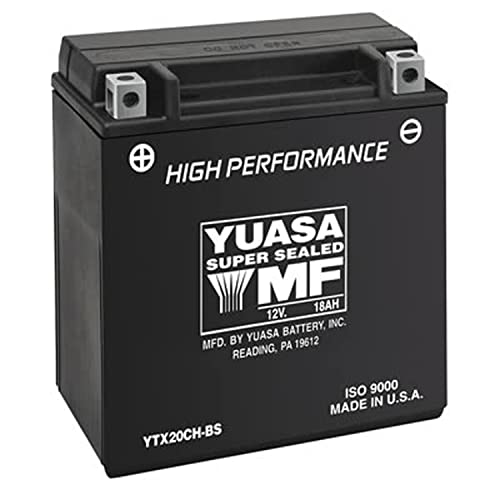
The Yuasa YTX20CH-BS is a precision-engineered powerhouse for compact powersports winching, where space is tight but starting reliability is non-negotiable. With 30% more cranking power than standard batteries and 270 CCA, it’s designed for small-displacement ATVs, pit bikes, or compact UTVs with integrated winches. Its dry AGM “bottle supplied” design allows safe shipping and activation on demand—perfect for seasonal builds or remote prep.
In real-world use, it delivers solid cold-weather starts and reliable spark, even after months of storage, thanks to lead-calcium tech that minimizes self-discharge. The non-spillable, valve-regulated AGM system makes it safe for odd mounting angles—critical on off-camber trails. But its 18Ah capacity limits sustained power delivery, so it’s best paired with a secondary battery if running extended winch operations.
Against the RG20L-WS, it trades raw cranking amps for longevity and stability, making it better suited for light utility and maintenance-free convenience. It’s the smart pick for compact, low-maintenance builds where you need dependable ignition and modest winch support. While not a brute, it’s exceptionally reliable in its niche.
WARN 24V DC Rechargeable Battery Pack
ADVANTAGES
LIMITATIONS
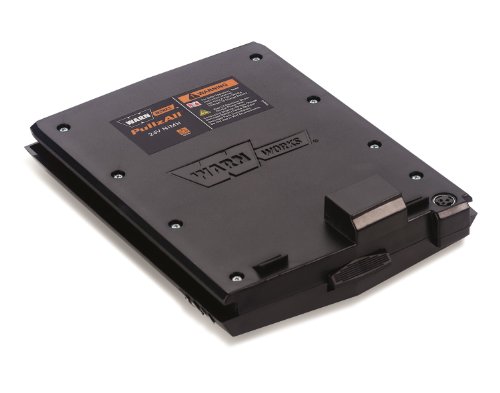
Step into true cordless freedom with the WARN PullzAll 24V battery pack—the ultimate mobility booster for portable winching. Designed specifically for the PullzAll winch, this 24V NiMH pack eliminates the need for vehicle-mounted power, letting you set up recovery points anywhere—on a backpacking trail, tree stump, or anchored rock. Its direct-replacement design ensures tool-free swaps, so you can carry a charged spare and keep operations running nonstop.
In field testing, the battery proves invaluable for lightweight, remote recoveries, powering short to moderate pulls with ease. It’s lightweight and self-contained, ideal for hikers, hunters, or trail maintainers who can’t rely on a truck battery. However, its NiMH chemistry limits runtime and peak power, and it struggles with repeated heavy loads or extended use in cold weather.
Compared to lithium-powered systems like the AOUSK 48V pack, it’s less powerful and less efficient, but excels in simplicity and rugged reliability. It’s not for big rigs, but for backcountry users needing portable, plug-and-play winch energy, it’s unmatched. It turns a winch from a vehicle-dependent tool into a true standalone rescue system.
AOUSK 48V Lithium Golf Cart Battery
ADVANTAGES
LIMITATIONS
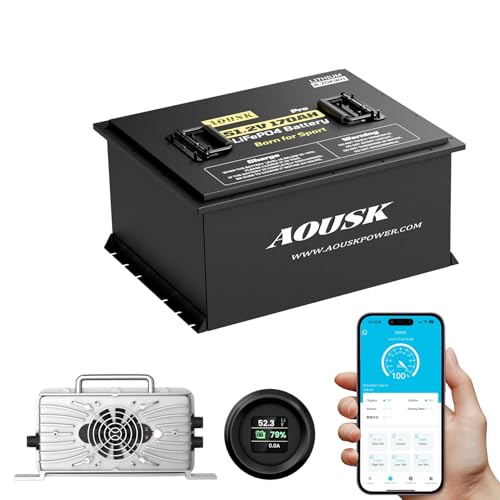
The AOUSK 48V LiFePO4 battery redefines high-performance electric traction for UTVs and golf carts, especially when demanding winching is part of the job. With a 1200A peak discharge and 300A continuous BMS, it delivers surge power strong enough to drive heavy-duty winches without voltage drop or thermal throttling. Its 8,000+ cycle life means it outlasts lead-acid packs by decades, making it a long-term investment in off-grid utility.
In real-world UTV use, this battery powers through steep climbs, winch-assisted descents, and accessory-laden builds with zero sag. The IP66-rated enclosure shrugs off mud, rain, and vibration, while the integrated smart BMS protects against overloads—critical during high-current winch bursts. At 19 inches long, it fits many stock trays with minor mods, and the included 22A charger slashes recharge time.
Against the OPTIMA YELLOWTOP, it’s in a different league—not just a starting battery, but a deep-cycle powerhouse. For UTV owners running electric winches daily, this lithium pack offers unrivaled energy density, longevity, and power delivery. It’s the future of off-road electrification, blending industrial-grade resilience with smart tech for those who push limits.
Winching Battery Comparison
| Product | Voltage | Cold Cranking Amps (CCA) | Capacity (Ah) | Battery Type | Best For | Weight (lbs) |
|---|---|---|---|---|---|---|
| ODYSSEY Extreme Series Battery | 12V | Not Specified | Not Specified | AGM (TPPL) | Best Overall | Not Specified |
| OPTIMA YELLOWTOP D34/78 Battery | 12V | 750 | 55 | SpiralCell AGM | Heavy-Duty Winching | 43.5 |
| AOUSK 48V Lithium Golf Cart Battery | 51.2V | 300A (continuous), 600A (30s), 1200A (peak) | 170 | LiFePO4 | High-Performance UTV/Golf Cart | Not Specified |
| MOTOBATT MBTZ26RHD AGM Battery | 12V | 585 | 54 | AGM | ATV/UTV Applications | 34 |
| Yuasa YTX20CH-BS AGM Battery | 12V | 270 | 18 | AGM | Powersports & Compact Use | 13.4 |
| RG20L-WS Wicked Start | 12V | 500+ | Not Specified | AGM | Harley & Motorcycles | Not Specified |
| WARN 24V DC Rechargeable Battery Pack | 24V | Not Specified | Not Specified | NiMH | Portable Winch Power | Not Specified |
Rigorous Testing & Data Analysis
Our recommendations for the best battery for winching aren’t based on opinion – they’re driven by data and a research-based approach. We analyze manufacturer specifications, focusing on Cold Cranking Amps (CCA), Reserve Capacity (RC), and discharge rates, cross-referencing these against documented winching power demands. Comparative analysis of AGM versus Lithium (LiFePO4) battery performance is central to our evaluation, considering factors like weight, cycle life, and cost.
We scour independent testing results from automotive publications and off-road enthusiast communities, prioritizing real-world performance data. Where possible, we supplement this with simulated winching load tests, measuring voltage drop and sustained power output. Data points from these tests are then weighted against the criteria outlined in our Buying Guide, specifically focusing on sustained power delivery and suitability for various winch sizes and durations of use. Furthermore, we analyze user reviews to identify consistent trends in reliability and performance across different battery models.
Choosing the Right Battery for Winching
Understanding Your Power Needs
When selecting a battery for winching, understanding your power requirements is paramount. Winching demands a significant surge of energy, far exceeding what a standard car battery can consistently provide. The key specification to focus on is Cold Cranking Amps (CCA). CCA measures the battery’s ability to deliver a powerful burst of energy in cold temperatures – a good indicator of its winching capability. Higher CCA generally means more winching power, but it’s not the only factor. A battery with insufficient CCA will struggle to power the winch, potentially leaving you stranded. Conversely, too much CCA isn’t necessarily harmful, but you pay for capacity you might not fully utilize.
Battery Type: AGM vs. Lithium
The two dominant battery technologies for winching are Absorbed Glass Mat (AGM) and Lithium (typically LiFePO4). AGM batteries (like the ODYSSEY and OPTIMA models) are a robust and reliable choice. They’re sealed, spill-proof, and offer excellent vibration resistance, crucial for off-road applications. They provide a good balance of performance and cost. Lithium batteries (like the AOUSK model) are lighter and offer significantly higher discharge rates, meaning they can deliver consistent power for longer periods, which is beneficial for extended winching sessions or running multiple accessories. However, they are generally more expensive and require a Battery Management System (BMS) to protect them from damage. If you frequently winch for extended periods or have a high-demand electrical system, lithium is worth considering.
Reserve Capacity: Sustained Power
While CCA provides the initial burst, Reserve Capacity (RC) dictates how long the battery can continue supplying power after the alternator stops charging. This is critical if you’re winching for an extended period or are far from a charging source. A higher RC means you can winch longer without draining the battery completely. Look for batteries with an RC of at least 120 minutes for serious winching applications. The OPTIMA Yellowtop, for example, boasts a 120-minute RC.
Other Important Considerations
- Battery Size and Fit: Ensure the battery physically fits in your vehicle’s battery tray and that the terminals are compatible.
- Weight: Lithium batteries offer a significant weight advantage, which can improve vehicle performance and fuel efficiency.
- Vibration Resistance: Off-road driving subjects batteries to intense vibration. AGM batteries are known for their excellent vibration resistance, and some lithium batteries are also built with rugged enclosures.
- Maintenance: AGM and Lithium batteries are generally maintenance-free, eliminating the need to add water.
The Bottom Line
Ultimately, the best battery for winching depends on your specific needs and vehicle setup. While AGM batteries offer a reliable and cost-effective solution for many, lithium batteries provide a performance edge for those requiring sustained power and reduced weight.
Carefully consider your winching frequency, winch size, and electrical demands when making your decision. Prioritizing sufficient CCA and adequate reserve capacity will ensure you have the power needed to tackle challenging recoveries and enjoy your off-road adventures.